Pacific Harbor Line's Cliatt drives success through safety, sustainability
5/1/2026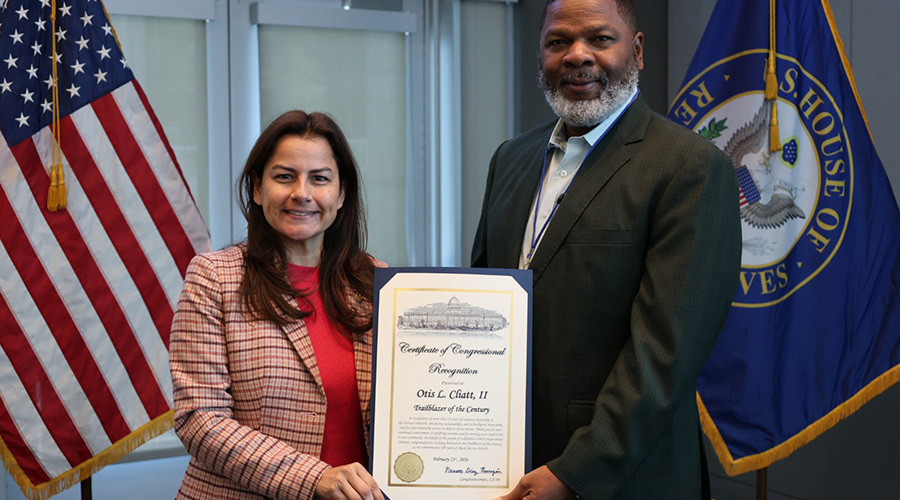
By Bridget Dean, Senior Associate Editor
Pacific Harbor Line is a core part of freight operations at the San Pedro Bay port complex, where it serves as the neutral switching railroad between Union Pacific Railroad and BNSF Railway at the ports of Los Angeles and Long Beach. PHL also serves nine intermodal terminals and numerous carload customers.
PHL President Otis Cliatt II flourishes in the busyness of it all. A decorated U.S. Army veteran with Class I experience, he oversees about 200 short-line employees and ensures the railroad stays resourceful and agile while keeping worker safety top of mind. Cliatt forged those values during his time in the U.S. Army, and he brought them with him when he joined PHL as vice president in 2010.
“That path in the military really defined the rest of my corporate career,” Cliatt says, adding that enlisting was one of the best decisions he made.
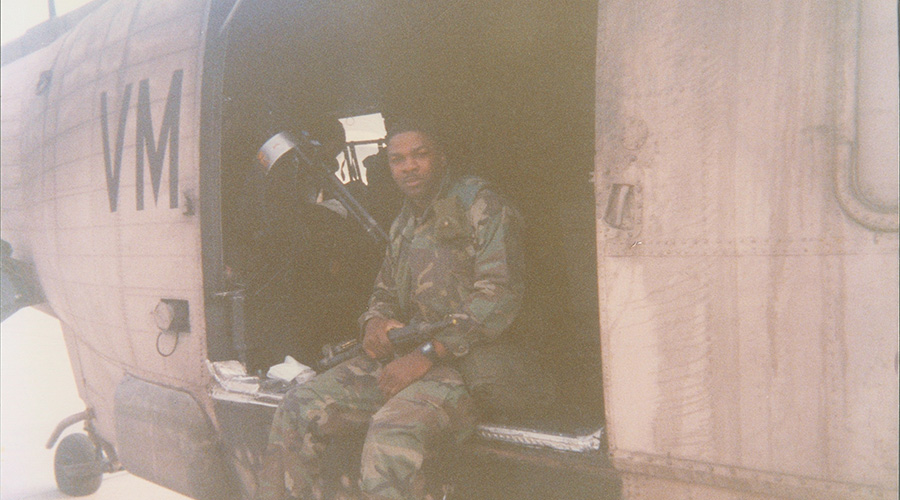 Shown: Cliatt inside a British helicopter in Kuwait Airport in 1991 during Operation Desert Storm.Otis Cliatt II
He was three years into a rocky first pass at college as a football player with an ill-fitting engineering major and few post-grad prospects when he joined the Army in 1987.
Officers in elite units quickly flagged Cliatt for more security clearance, special training and important roles, including Special Operations and Airborne Communications Operator, based on his performance in challenges that tested independent thinking, leadership and athletic abilities, he says.
Cliatt progressed through several roles before being assigned to Fort Bragg as a member of U.S. Army Special Operations Command. In that role, he and a small team were tasked with carrying out missions, observing and providing communication back home while over enemy lines. In 1991, Cliatt entered combat for Operation Desert Storm, earning a Bronze Star for his actions.
Despite a flourishing career in Army Special Operations, Cliatt at the end of his first four years in the Army opted to return to school. This time around, Cliatt zipped through, graduating from Florida A&M University with a degree in business economics.
And when UP was looking for fresh college graduates to interview for a management development program, Cliatt believes he stood out among his peers. Seven back-to-back interviews with Class I senior leadership would be intimidating for a typical college graduate, he says. For the self-described “somewhat-polished military combat veteran,” it was not.
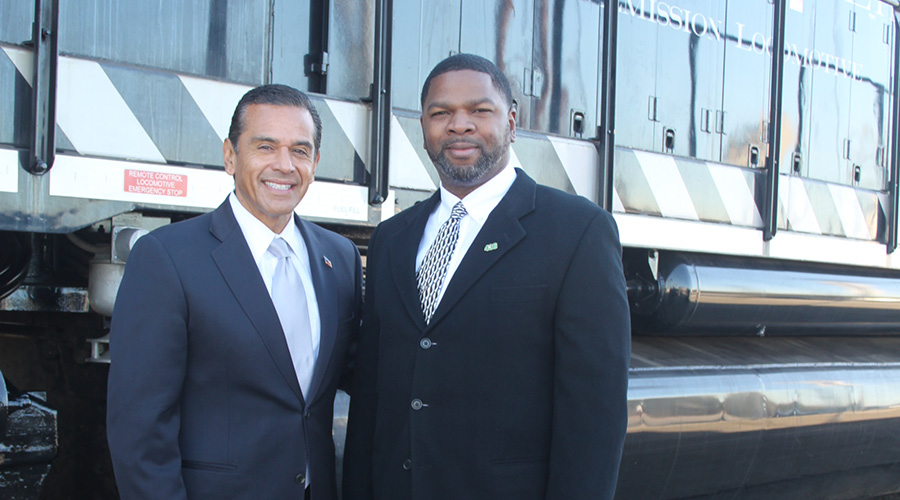 Former Los Angeles Mayor Antonio Villaraigosa with Cliatt at the new PHL B200 rail yard in 2013.Pacific Harbor Line
After snagging a spot in the program in 1993, Cliatt remained at UP for seven years, holding multiple operations leadership roles. In 2000, joined Savage Industries as director of safety and regional vice president, where he stayed for a decade before joining PHL in 2010. Cliatt was promoted to president in 2012.
Leading a safer, more sustainable short line
The “little guy” among freight giants, PHL must operate with the drive to chase every opportunity and with enough foresight to see how the ports, UP and BNSF will react to certain economic stressors. Having previously worked for UP, Cliatt also knows the Class I playbook. He understands the way UP and BNSF historically have positioned themselves to sustain growth.
“If you were not polished enough, or if you have not had enough experience on that level playing field, you could get eaten alive here very easily,” he says.
PHL has not been eaten alive — in part, Cliatt believes, because the short line can anticipate and adapt to the Class Is’ and the ports’ strategies. And PHL is doing more than just surviving; it is becoming a more technologically advanced and environmentally friendly railroad. With backing from PHL’s parent company, Anacostia Rail Holdings, the short line has become an industry leader when it comes to eliminating locomotive carbon emissions. The ports of Los Angeles and Long Beach are known for their “green” initiatives; it only makes sense that the railroad serving them would be too, he believes.
Between 2009 and 2017, the railroad gradually upgraded its locomotives from Tier 0 to Tier 3 and Tier 4 designations. PHL was the first short line to reach Tier 4 designation, Cliatt says. In 2023, PHL partnered with Progress Rail to deploy the first zero-emission, battery-electric locomotive at the port complex, marking another first for the short-line industry.
Cliatt-led PHL continues to push for improvement. Given the cost of reducing emissions, the short line needs to stay on top of grant funding opportunities for rail and environmentally friendly projects, he says.
The short line also must get creative to keep its budget in line. Because PHL operates under a service contract with the ports, the short line can’t raise rates to keep up with rising operational and labor expenses. In addition to identifying ancillary income sources to shore up the budget, Cliatt drove meaningful improvements to PHL’s safety record. Preventing and reducing injuries and accidents improves the bottom line, he says.
“I’m most proud of the safety awards that we’ve won,” he says. Among them include the American Short Line and Regional Railroad Association’s President’s Safety Award in 2022 and the association’s Jake Award in 2021. “The other thing that I could hang my hat on of being proud about is [the] number of PHL managers we have that have continued their education and received a bachelor’s degree.”
More PHL managers have earned their degrees than any other Anacostia short line, he says. Cliatt doesn’t just say he values education; he walks the walk. In 2015, he completed an executive business program at the University of California Los Angeles.
Since then, he’s also taken a port executive course, during the COVID-19 pandemic he took a class about wine, and he recently was accepted into the University of Miami’s executive DBA program. He enjoys connecting with other students, who may not work in the short-line realm but have the same drive to solve problems in their respective industries.
A meaningful recognition
Cliatt in February was honored for his role creating a more sustainable San Pedro Bay region by California Rep. Nanette Barragan. She presented Cliatt with the Black History Month Trailblazer of the Century award in recognition of his leadership at PHL and commitment to environmental efforts. Cliatt accepted the award during Barragan’s annual Black History Month commemoration at the Michelle Obama Neighborhood Library in Long Beach.
Barragan’s office has helped PHL in pursuing funding to make improvements to the locomotives, which in turn drive improvements for the entire San Pedro Bay. It was a wonderful recognition, he says, not only for himself, but also for PHL. In the rail industry specifically, recognition of Black history and achievements is “huge,” Cliatt says.
“There’s been a number of years in the past where there were only certain jobs that were available, not only for African Americans, but also for Chinese Americans, if we go all the way back in the history of railroading,” he says.
Today, the short line that serves the largest marine port complex in the Western Hemisphere has an African American president, and he leads one of the most diverse groups of employees in the industry, he adds.
“That’s pretty big to me,” Cliatt says.