NS replaces Richmond bridge in one weekend of work
9/8/2026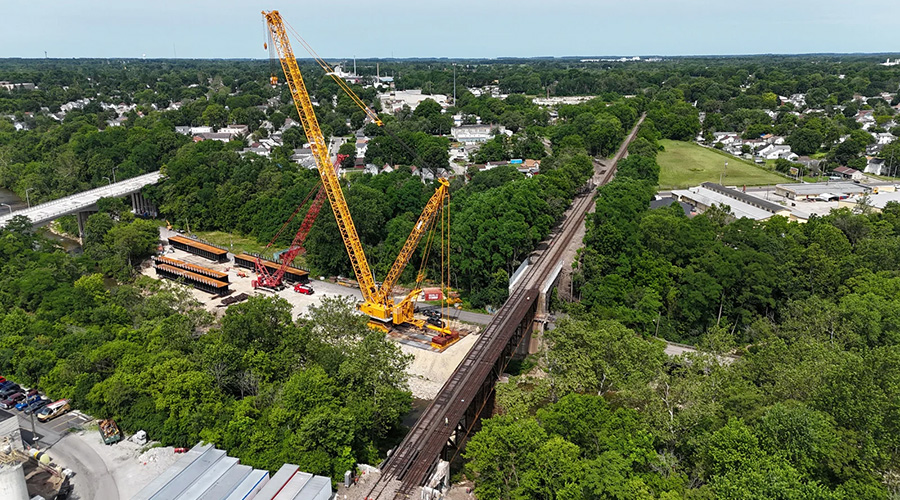
By Hazel Wheaton, Associate Editor
Hikers on the trail along the East Fork Whitewater River in Richmond, Indiana, were recently given a rare glimpse of a major infrastructure project in motion when Norfolk Southern Railway replaced an aging railroad bridge. But it was a blink-and-you'll-miss-it, limited-time-only show, as the replacement was accomplished in just 33 hours over the July 4th weekend. Construction was finished and the trains were running again before the glow of the fireworks faded.
The truss-and-beam spans were replaced with three modern ballast deck beam spans. Ballasted-deck bridges provide a more consistent track surface, increasing stability, reducing component wear and simplifying maintenance, NS officials said.
Planned replacement, with lots of planning
Upgrading the bridge was a planned replacement, said Regional Engineer Structures Nick Bayer in an email. The work was scheduled as part of a continuous inspection process. Regular, routine inspections are backed up by secondary drone and climbing inspections and targeted evaluations, as well as ongoing systems monitoring, he said.
The upgrade took months of planning and coordination, as NS teams collaborated to devise the perfect sequenced plan. Crews needed to remove the existing spans, install the new components, place new track and ballast, and reopen the corridor as swiftly as possible while ensuring safety and structural stability.
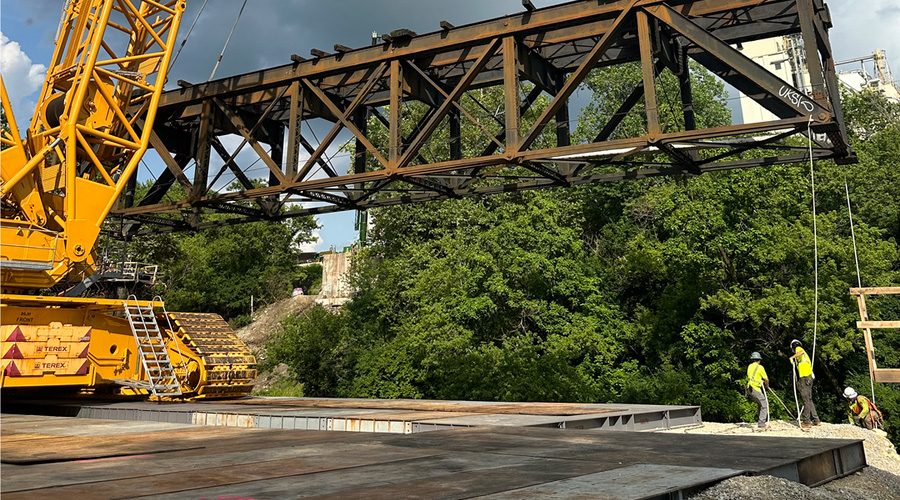 A 1,768-ton crane neatly picked up and replaced massive sections of the bridge, each section weighing hundreds of tons.Norfolk Southern Railway
"Engineering, construction and operating teams [coordinated] every aspect of the replacement strategy, including safety planning and site coordination, before the outage window began,” said Bayer. “The bridge replacement itself was the culmination of significant planning, staging and cross-functional collaboration between the bridge office, bridge and track field teams, construction management and the contractor.”
NS prioritizes its bridge replacements based on a number of factors, including engineering inspections, bridge ratings, operational importance, maintenance needs and long-term network objectives. Bayer said.
“The Richmond Bridge supports a key Midwest freight corridor, making its long-term performance especially important,” he said.
The Richmond Bridge is part of NS’ CF Line, which runs north from Cincinnati, Ohio, to Muncie, Indiana.
Site complications
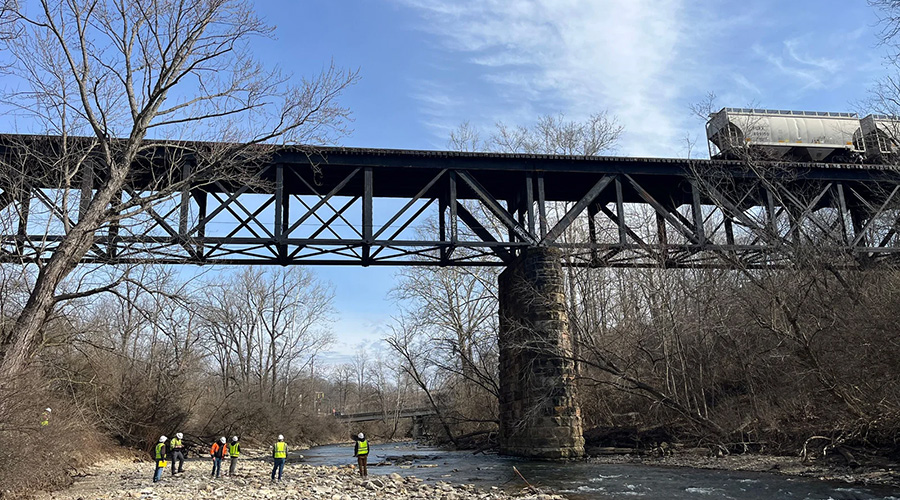 The bridge’s location added particular challenges: tight quarters, the river, an active urban setting and proximity to public areas.Norfolk Southern Railway
At the center of the production was a 1,768-ton crane, which neatly picked up and replaced massive sections of the 308-foot-long, double-track bridge, each section weighing hundreds of tons.
Large crane lifts, extensive material staging and coordinating multiple work groups were just part of the expected complexity of the project, while the bridge’s location added particular challenges: tight quarters, an active urban setting, proximity to public areas and pathways, and — of course — the river.
Add the need to keep the construction window tight to minimize disruption to the railroad and the public, and it all created a particularly demanding engineering plan. The lessons learned in preparing and executing the replacement at Richmond will be useful in future projects, Bayer said.
“This project showed what it takes to deliver for the railroad at a high level, from early planning to final installation,” he said.
“It was a full team effort from planning through execution,” added Ruth Brown, NS chief engineer, bridges & structures. “Every person involved played a critical role in delivering a safe, high-quality outcome.”