LA port briefing covers manufacturing challenges, traffic trends
8/26/2026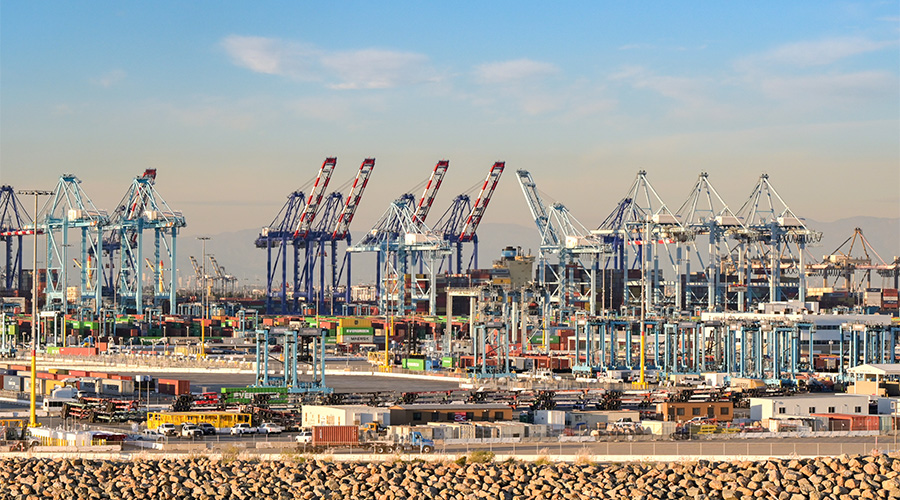
By Bridget Dean, Senior Associate Editor
Port of Los Angeles Executive Director Gene Seroka hosted a media briefing Aug. 18, during which he shared the port’s latest monthly cargo statistics and provided some context for what’s been an unusual shipping season.
The port and its partners are responding to changing global trade policies and relationships, as well as conflicts in the Middle East, to continue moving freight as efficiently as possible.
Seroka was joined by Lance Hastings, president and CEO of California Manufacturers and Technology Association (CMTA,) for a discussion about the U.S. and California manufacturing sectors, and the global, national and local issues impacting the production and movement of goods.
Dealing with supply-chain disruptions
Manufacturers in California have some lingering concerns about the economy in the continuing back half of the year. The industry runs on a just-on-time economy, Hastings says.
When there are disruptions — or just the premonition of disruptions — to the supply chain, it can take a while for manufacturers to return to routine purchasing and production schedules. And there have been a lot of supply-chain disruptions this year that have made it difficult for manufacturers to make long-term decisions, Hastings adds. Decisions about equipment purchasing, location expansions and staffing, for example, are made carefully over months or years.
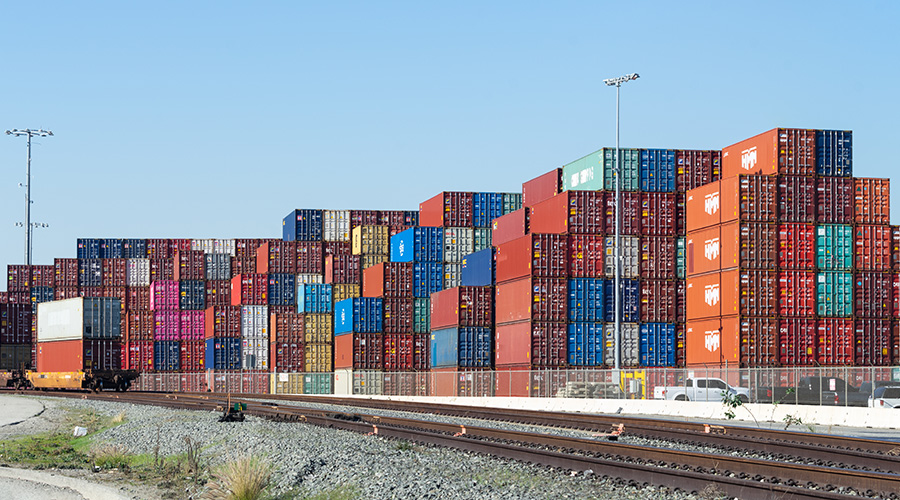 August is predicted to be another strong cargo month for the port.Angel DiBilio / Shutterstock
But manufacturers always need to be looking forward and planning for growth, Hastings says. Despite disruptions and uncertainty, manufacturers are still making those long-term decisions.
"Stagnation is not really an option for us," he says.
California manufacturers are also striving to keep pace with both foreign and domestic competitors. What could help is support from the California government, Hastings says. CMTA has been advocating for the state to adopt a manufacturers’ investment tax credit for the past three years.
The organization is a supporter of California Senate Bill No. 587, which was introduced in February 2025 and is under advisement in committee. The bill would create a targeted tax credit that would apply to the local portion of sales and use taxes paid on property for manufacturing and research and development activities, according to CMTA's policy issues webpage.
That kind of government backing would help keep manufacturers in the state, Hastings says. He's concerned about the loss of small- to medium-sized, family-owned manufacturing businesses. Often producers of components that are used in other manufacturing operations around the country, those businesses are struggling to make ends meet because of high costs in California that aren't offset by an investment credit, Hastings says.
Still, the L.A. port imports equal amounts of finished goods and parts and components, and the latter segment is posting solids gains this year, according to Seroka. That's a good sign for CMTA and the broader manufacturing industry, and Hastings and the CMTA are trying to remain optimistic about the rest of 2026 and the start of 2027.
California is a leading indicator for the national economy. If things are going well there, it is a good sign for the entire country, Hastings says.
"This last quarter of 2026 will provide a good idea of what 2027 will look like," he adds.
Prepping for more cargo
In July, the L.A. port handled just under 960,500 20-foot equivalent units (TEUs), down about 5.8% compared to volume in July 2025, which was the port's busiest July on record. Despite the year-over-year downturn, July volume was still above the port's five-year average.
Imports and exports were both down about 8% in July. At nearly 500,000 TEUs, imports were still on par with the port's five-year average. Exports in July were just shy of 112,000 TEUs, continuing a downward trend in 2026, Seroka says.
Peak shipping season for the port has historically run August through the end of November, but the port hasn't had a regular shipping season in years, he adds. The port has stayed busy in summer, and August is predicted to be another strong month for the port.
"The reason is straightforward. Businesses continue to navigate an uncertain trade environment, and when they see a window of opportunity — some relief of tariffs, costs or timing — they act quickly to move cargo," Seroka says.
Additionally, the port and its transportation partners, including longshoremen, ocean carriers, truckers and railroads, are preparing for up to a 5% uptick in import volume soon. More shippers are opting for routes that avoid the Panama and Suez Canals due to the uncertainty of drought and war, respectively.
"It's our duty to plan. If a portion of allocations are taken from the import community and pushed over the West Coast for certainty purposes, we've got to be ready," Seroka says. "I feel confident that we are."