Colorado tax credit program targets more usage of UP branch line
9/12/2025
By Jeff Stagl, Managing Editor
Less than a decade ago, a number of communities in Colorado were gaining economic benefits from nearby coal mines and coal-fueled power plants.
But the state enacted laws requiring significant reductions in greenhouse-gas emissions, prompting many mines to close and many power plants to phase out coal and shift to lower-carbon fuel alternatives.
The drop-off in coal usage over the past several years in turn impacted freight-rail lines in parts of Colorado, significantly reducing traffic volume.
So, state officials have been working to find new ways to prompt economic growth in so-called “coal-transitioning communities” that had relied on mines and/or power plants, in part by attracting more usage of affected freight-rail lines.
One major result of their efforts is a freight-rail tax credit program that was introduced by Colorado Gov. Jared Polis and the Colorado Office of Economic Development and International Trade (OEDIT) in mid-July. The program is designed to diversify the use of freight-rail lines affected by coal plant closures and power plant transitions.
The tax credit will cover up to 75% of the costs associated with establishing or increasing freight-rail transportation. Eligible expenses include railroad fees, transloading costs and capital costs associated with rail infrastructure.
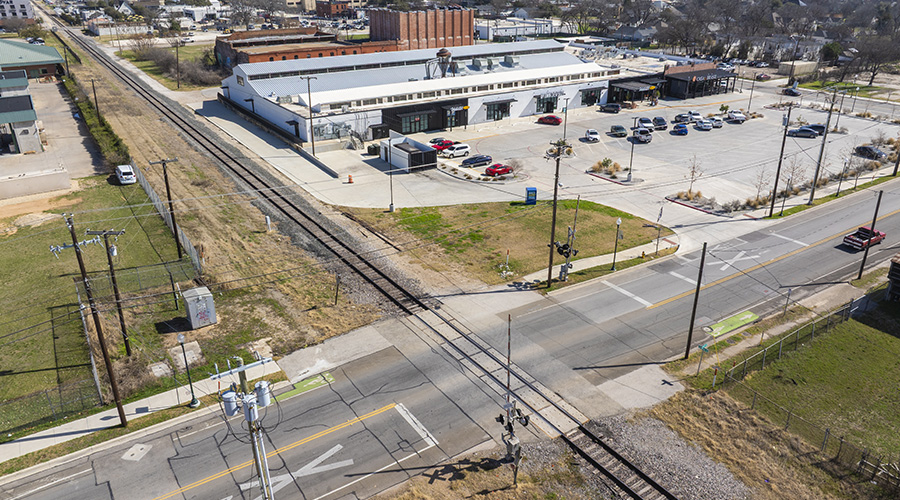
The program is intended to identify specific rail lines experiencing decreased usage and to support their continued use through increased business activity, particularly in northwest Colorado, state officials say. Initially, the program will focus on incentivizing the use of Union Pacific Railroad’s Craig Branch Line, which runs through the Yampa Valley and such communities as Craig, Elk Springs and Yampa in Moffat, Rio Blanco, and Routt counties.
State officials also are hoping the tax credits help set the stage for future passenger-rail service in Colorado. By the end of the decade, a Mountain Rail service is tentatively projected to begin serving riders between Craig, Hayden, Steamboat, points in Grand County and Denver.
As shippers use the UP branch line more to haul freight, the increase in rail revenue will help support the Mountain Rail initiative, state officials say.
“Developing a combination of freight traffic and passenger-rail use on the Craig Branch will foster economic development in northwest Colorado and ensure this important asset continues to support the local economy and community,” said OEDIT Executive Director Eve Lieberman in an email.
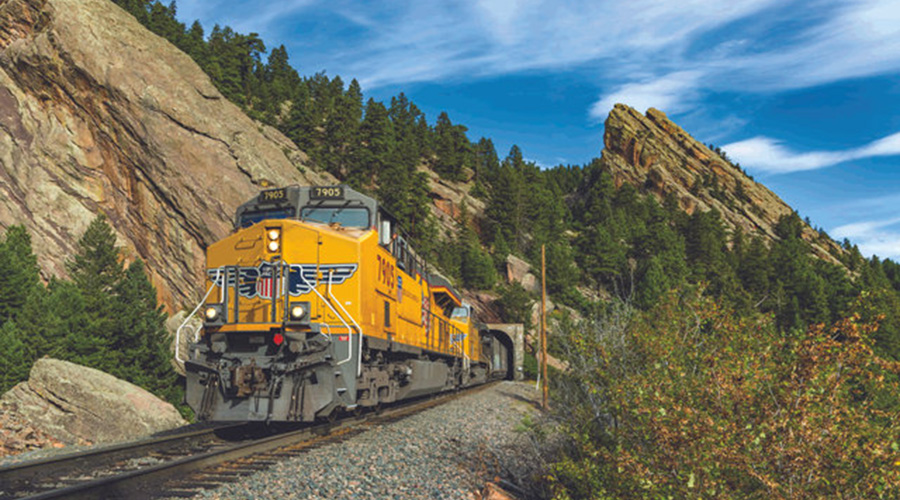 UP operates 1,505 miles of track in Colorado. In 2019, the Class I originated 165,746 cars and terminated 141,105 cars in the state. But in 2023, those car totals dipped to 153,575 to 146,208, respectively. Union Pacific Railroad
Encouraging the continued use of freight-rail lines supports strong railroad infrastructure, which is important for any future passenger-rail service, added OEDIT Communications Director Alissa Johnson in the email.
“The intent is to encourage the continued use of rail lines experiencing, or at risk of experiencing, decreased usage due to changes in coal production while supporting the diversification of local economies,” she said.
The program will reserve up to $5 million in freight-rail tax credits per year, starting this year and ending in 2035. OEDIT will manage the program in consultation with the Colorado Department of Transportation (CDOT) and Office of Just Transition. CDOT will conduct reviews annually to determine whether additional freight-rail lines should be added to the program.
Overall, an enabling statute prioritizes freight-rail lines at risk of experiencing decreased usage.
“So, an individual line’s inclusion in the program does not necessarily indicate that it is already experiencing decreased usage,” said Johnson.