Intramotev to develop first federally regulated case for autonomous rail cars
11/18/2026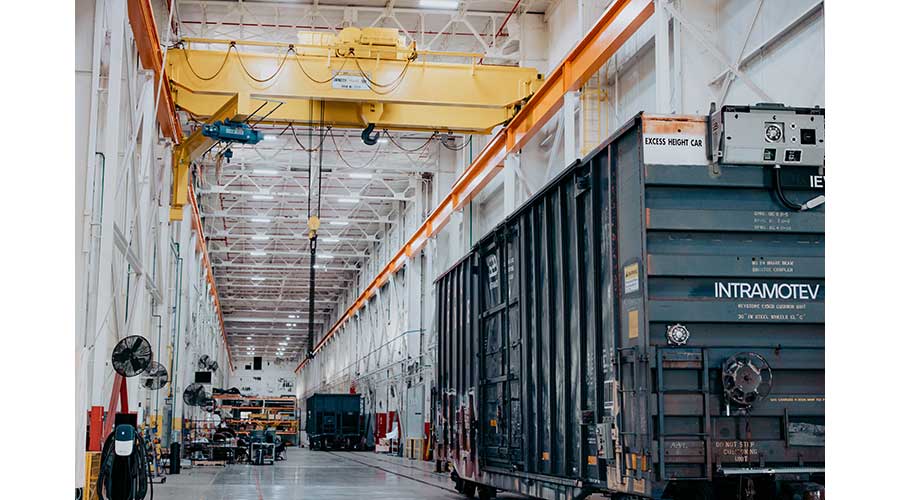
By Bridget Dean, Senior Associate Editor
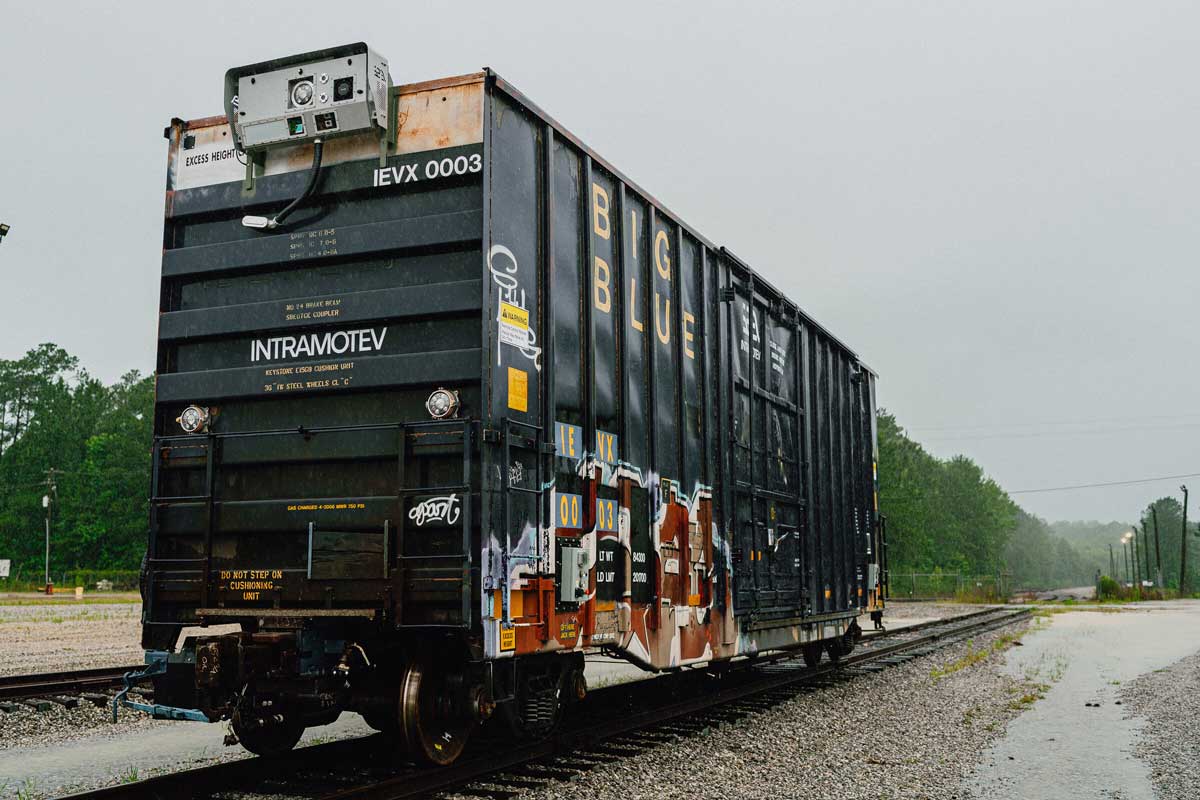
The city of Columbia, Missouri, is turning to autonomous technology to increase capacity on its municipal utility railroad, the Columbia Terminal Railroad (COLT). Through a $16 million Consolidated Rail Infrastructure and Safety Improvements (CRISI) grant, the city will partner with Intramotev to deploy its battery-electric TugVolt rail cars.
Headquartered in St. Louis, Missouri, Intramotev is the first company to commercialize self-propelled rail cars in the United States. The company has worked with R. J. Corman Railroad Group and Watco for unregulated use cases, such as on continuous loops in mines and at plants and mills. The multipurpose units can haul other cars, roll on their own or be transported in line with standard cars.
Deploying the TugVolts on the COLT for terminal and switching service will establish another first for Intramotev: A Federal Railroad Administration (FRA) safety and performance record for the autonomous technology.
Critically, the partnership between COLT and Intramotev will be the template for future deployments, says Intamotev co-founder and CEO Tim Luchini. He crossed paths with members of COLT's board while giving a presentation about the TugVolt to another interested group in Columbia. Board members expressed interest and Intramotev's technology could solve some of the railroad's pain points, he adds.
Modernizing COLT in Missouri
COLT operates two locomotives built in 1965 and 1979. The railroad provides shippers in Columbia with access to Norfolk Southern Railway via a 21-mile route to Centralia, Missouri. Although limited, that service is essential to the rail shippers in the city.
"Not every community can or will make the choice to keep a rail line active after the economics don't support it anymore," says Luchini.
The railroad would have been shuttered in the late 1980s if the city had not taken over ownership, he says. As a result, COLT has a lean operating model and can only minimally invest in infrastructure upgrades.
With the right funding, Intramotev could help modernize COLT's fleet and operating model to be profitable. If the railroad offered more frequent service and gained more customers, it would no longer require support from the city and could potentially return to private ownership, says Luchini.
It was a good case for federal CRISI funding, he says. The FRA agreed — the city's award will cover the multi-phased implementation of two TugVolt units and necessary infrastructure upgrades to help keep the railroad operating safely. COLT has an impressive safety record of its own, having received the American Short Line and Regional Railroad Association's Jake Safety Award for more than 20 years.
"We want to make sure that whatever we do fits into that same operating model," says Luchini. "That's first and foremost in our mind."
The TugVolts will be phased into service at the COLT. Intramotev will manufacture the first TugVolt for arrival in Columbia in early-to-mid 2027, and it will operate between COLT's transload yard and local shippers. Once the second unit is manufactured, the TugVolts will also be used for maintenance-of-way (MOW) purposes. Specifically, they will help distribute ballast for 36,000 new ties COLT will be installing as part of the CRISI grant-funded project.
Eventually, both cars will operate in conjunction with the locomotives. Being able to use TugVolts for freight service and MOW work will provide COLT significant operational flexibility and reduce reliance on its aging locomotive fleet, says Luchini. The TugVolts will also produce less noise and reduce fuel costs for the city. Using the TugVolts in MOW applications will also help Intramotev develop the safety record for the FRA, says Luchini.
"There's a lot of operational gains, where they can get multiple tools in one at this railroad. I think that this aligns well with the city of Columbia's strategic and community benefits goals," he says.
COLT is an optimal partner for Intramotev to jointly develop the template for future deployments because the railroad reflects the operations and Class I connections of 600-plus other short lines in the United States, Luchini stresses. He believes TugVolt technology can be a catalyst for short lines' traffic growth on a large scale.
In Columbia, the partnership is expected to support regional economic development opportunities. COLT's current customers have already expressed interest in growing with the railroad through its collaboration with Intramotev.
"When there is a business looking for a new home for rail, Columbia is going to have one of the most modern rail systems available," says Luchini. "[COLT] will be a first-of-its-kind railroad leader."