Belt Railway completed major retarder replacement in summer
10/27/2026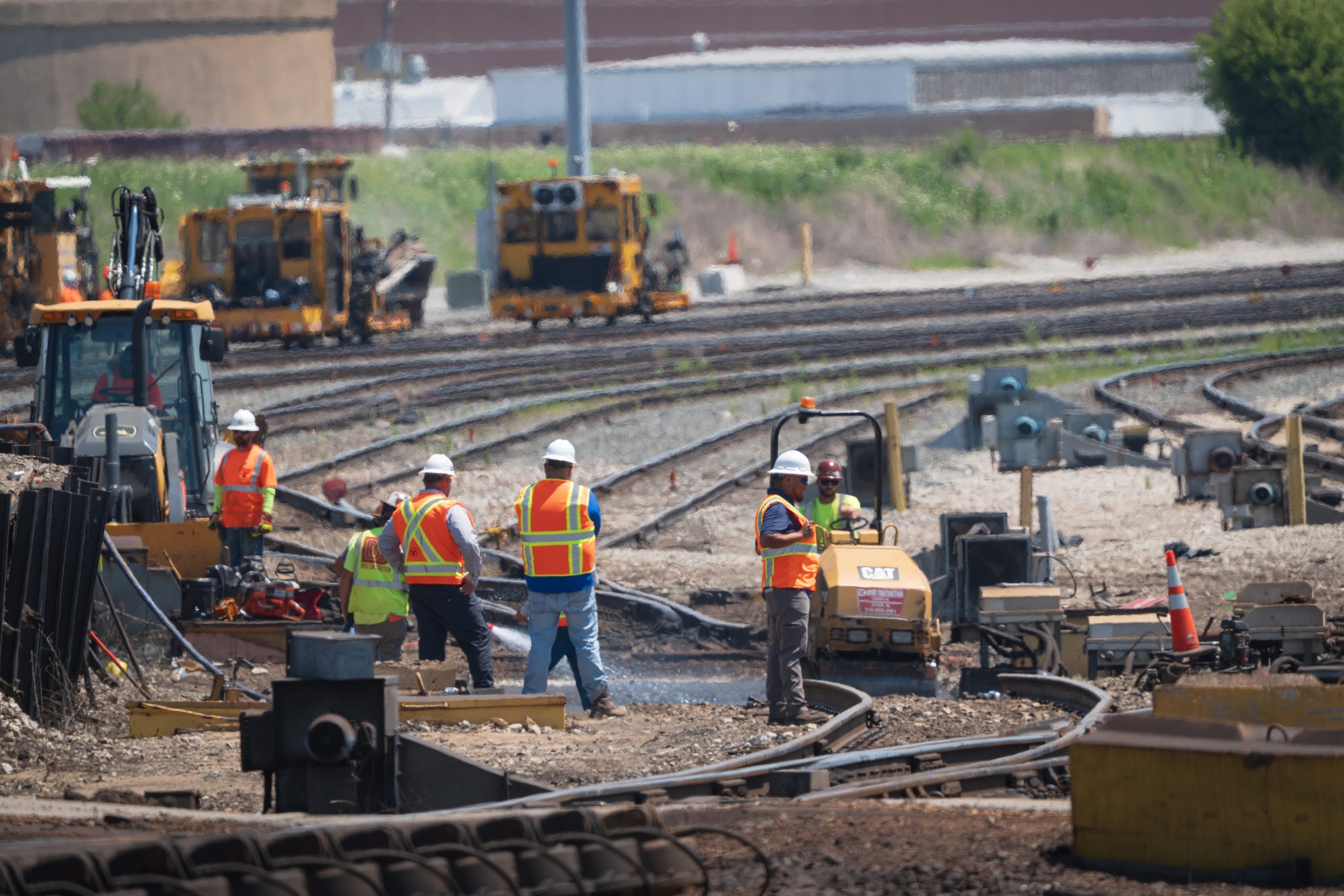
By Jeff Stagl, Managing Editor
In prior summers, the Belt Railway Co. of Chicago (BRC) employed a planned outage in its large classification yard to replace retarders. The short line followed that approach again this past summer. But something was different this time when the work was performed in July.
Replacing the retarders in both the West and East classification yards in a matter of hours turned out to be a unique undertaking.
"We have performed this work in the past with work windows of this size, but this project was a bit larger," said BRC Chief Engineer Patrick Jones in an email.
The largest intermediate switching terminal railroad in the United States, the BRC owns and manages the 786-acre Clearing Yard, which spans 5.5 miles and features more than 250 miles of track. A wicket-shaped tower controls the switches and retarders of both an east and west classification yard. The BRC serves all the railroads that operate in Chicago and interchanges with all the Class Is.
In the west classification yard, workers replaced the group 2 retarder, graded the area and installed 12 inches of hot-mix asphalt to provide a strong and level base for the retarders and support drainage. In the east yard, retarders were replaced in groups 1 and 2, followed by grading and asphalt paving work.
"The work block to replace the retarders was 12 hours for the west yard project and 14 hours for the east yard," said Jones. "In the west, we replaced two retarders in the block and in the east, we replaced three in the block."
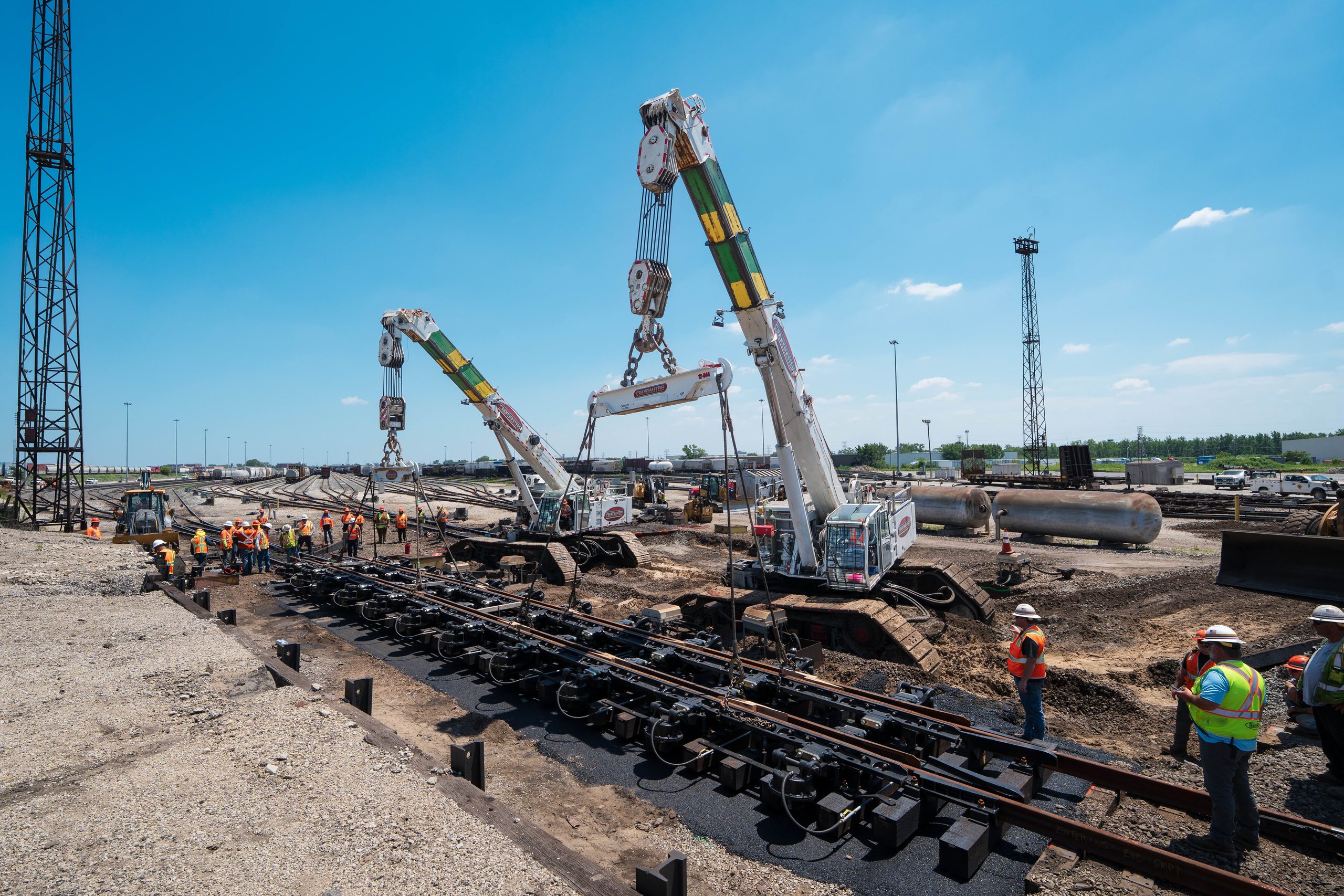 The railroad expects the upgraded retarders and supporting trackwork to enhance performance and reduce maintenance needs in the classification yard.Belt Railway Co. of Chicago
The Clearing Yard outage also afforded an opportunity to complete other track maintenance work, including tie, switch timber and rail replacement, gauging and spiking tasks. Contractors provided heavy equipment support, including removal and placement of the retarders, grading and asphalt work, while BRC employees handled remaining tasks.
The coordinated approach enabled the work to be completed within the scheduled outage time while also addressing additional maintenance needs, BRC officials said.
The upgraded retarders and supporting trackwork are expected to enhance performance and reduce maintenance needs in the yard. The work also included adjustments to the grade leading into the retarders so rail cars can maintain higher velocity while they move through the classification process, BRC officials said.
The speed, coordination and accuracy of all the work performed was impressive, said Jones — to the point the short line expects to continue replacing retarders in a similar fashion next year.
"It worked very well," said Jones. "We have a couple projects scheduled for 2027."