Short-line traffic in first half? Mostly on the positive side
7/31/2026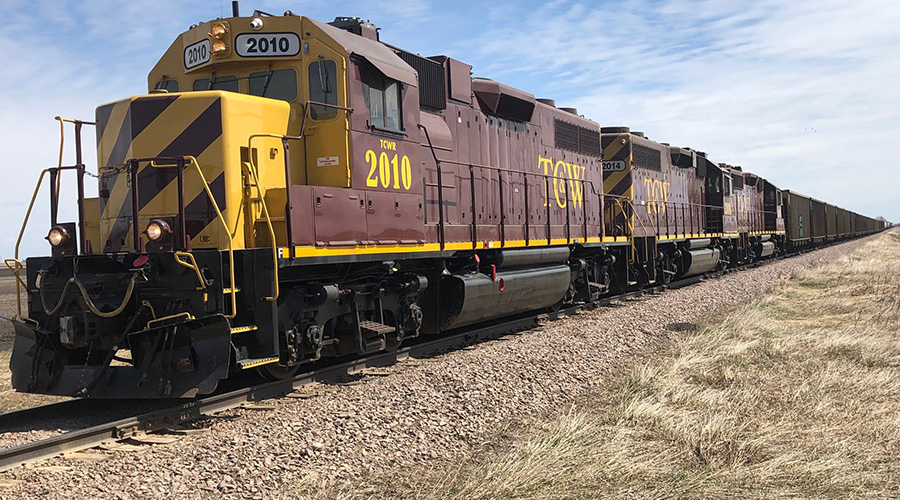
By Jeff Stagl, Managing Editor
Combining a fairly strong first quarter with what turned out to be an even stronger second quarter, short-line traffic came out ahead in 2026's first half.
Regionals' and short lines' carloads through July 4 — which ended the year's 26th week — totaled 3,067,725, up 3.9% year over year, according to the RailConnect Index of Short Line Traffic compiled by Wabtec Corp.’s GE Transportation arm. Data in the index was compiled from 446 regionals and short lines.
Eight of the 14 commodity groups tracked by the index posted gains, led by carloads of intermodal (up 17.4% to 637,711 units), all other traffic (up 12.3% to 45,030 units), waste/scrap materials (up 11.9% to 189,400 units) and stone/clay/aggregates (up 8.5% to 349,101 units).
Grain carloads rose 4.1% to 365,028 units; petroleum and coke loads increased 3.1% to 94,790 units; farm and food products volume (excluding grain) ratcheted up 1.5% to 144,026 units; and motor vehicles and equipment shipments inched up 1.2% to 101,730 units.
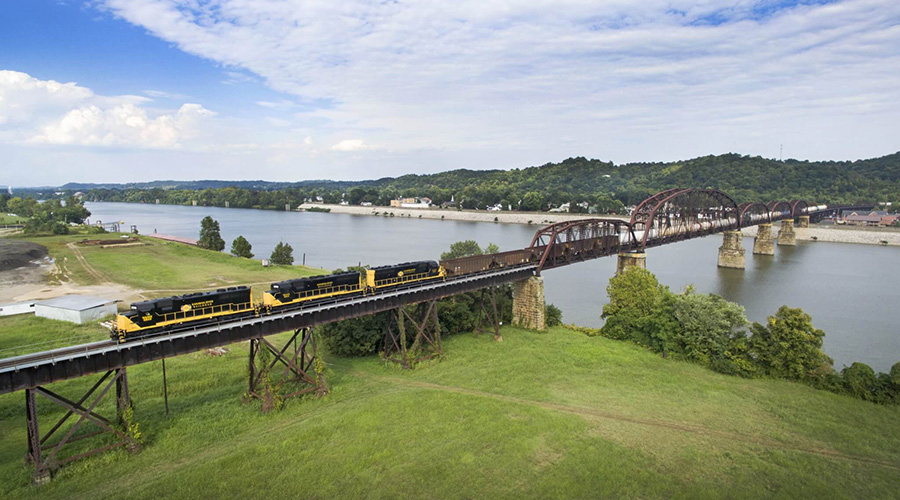 Carloads climbed 9.1% in the first half for Watco. The holding company’s 360-mile Kanawha River Railroad (shown) operates in Ohio and West Virginia. Watco
Of the six commodity groups that registered decreases, the biggest decliners were coal (down 15.3% to 97,019 units), paper products (down nearly 6% to 138,567 units) and ores (down 5.3% to 69,649 units). In addition, lumber and forest products carloads dropped 3.8% to 139,752 units, chemicals traffic fell 2.3% to 486,711 units and metals and products loads dipped 1.9% to 209,211 units.
Since volume in the second quarter was a larger contributor to short lines' first-half traffic, RailPrime reached out to a number of holding companies, regionals and short lines to learn how their carloads fared in the last quarter. Following is data and information about Q2 and/or first-half traffic provided via email from 10 short-line industry entities.
Some high points for holding companies
Genesee & Wyoming Inc.'s (G&W) carloads increased in Q2 on a year-over-year basis. There were different traffic-growth contributors in each month of the quarter for the company, which owns and operates more than 100 regionals and short lines in North America.
"[The growth] was driven by higher chemicals and plastics in April, higher petroleum products in May and higher metals in June," said G&W spokesman Tom Ciuba.
For Watco, carloads through the first half climbed 9.1% compared with the same 2025 period. Q2 volume rose 5.4% from Q1's level while traffic in June jumped 7.4% from June 2025's mark.
The biggest contributors to first-half traffic growth for the company — which owns and operates four-dozen regionals and short lines — were agricultural products (up 18.9%), minerals (up 17.5%) and chemicals (up 11.8%).
In addition, food products carloads climbed 9.5%, pulp/paper loads jumped 6.4%, hazardous material traffic grew 5.6%, coal volume increased 5%, lumber loads rose 4.9% and metals traffic went up 4.8%.
 Farmrail’s grain traffic fell from 946 carloads in first-half 2025 to 495 carloads in first-half 2026 due to a poor wheat harvest this year.Farmrail System Inc.
Traffic wasn't quite as strong in Q2 for Livonia, Avon and Lakeville Railroad Corp. (LAL), which owns four short lines. Volume was only in line with last year's mark, said LAL President and CEO Bob Babcock.
"There was some growth in frac sand and food products," he said.
Regionals weather ups, downs
In the first half, carloads decreased a tad for Farmrail System Inc., from 3,509 a year ago to 3,414.
“Aggregate traffic has remained pretty flat, around 1,100 carloads,” said Laci Bryant, an assistant commercial manager for Farmrail, which includes Farmrail Corp. and Grainbelt Corp. that operate several hundred miles of track in Oklahoma. "Grain traffic went from 946 to 495 carloads due to a poor wheat harvest this year."
The biggest traffic change occurred on the south end of Farmrail’s line, where cotton loads ballooned from 25 last year to 756 in the first half. Conversely, petroleum traffic went from 287 carloads last year to zero and chemical traffic remained flat at 660 carloads, said Bryant.
The traffic fortunes were a bit better for Iowa Interstate Railroad LLC, which bumped up Q2 traffic by 1% compared with the same 2025 period. Consumer and other traffic shot up 55% due to higher car storage volume, agricultural products traffic climbed 27% because of market shifts, grain traffic soared 23% — driven by strong soybean demand and higher shipments of corn to Mexico and local processors — and forest products traffic ballooned 21% due to higher demand.
But there were some trying commodity groups for the 580-mile regional that operates in Iowa and Illinois. Q2 metals and machinery traffic plunged 34% because of soft steel demand, intermodal traffic fell 27% due to a very competitive regional truck market and aggregates/coal traffic decline 21% since the construction market got off to a slow start in 2026. In addition, ethanol traffic decreased 14%.
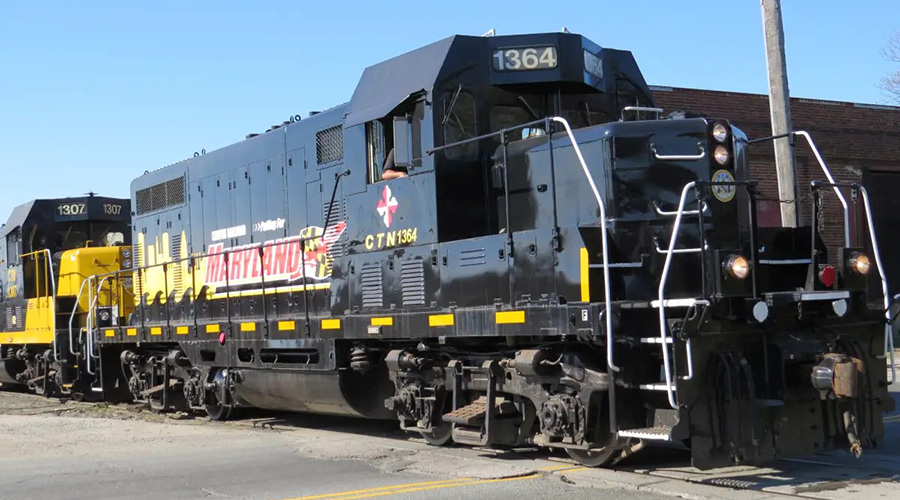 From halfway through Q1 to the end of Q2, Canton Railroad’s traffic increased significantly this year.Canton Railroad
Meanwhile, traffic for the Red River Valley & Western Railroad (RRVW) dipped 1% year over year both in Q2 and in the first half. The regional operates more than 500 miles of track primarily in the southeast quarter of North Dakota.
"Almost all carload categories are flat year over year, with the exception of ethanol. In the first half of the year, some ethanol volume shifted to an alternate carrier serving different markets," said RRVW President Victor Meyers. "Export corn demand from the RRVW service territory remained steady, supporting grain carloads, while export soybean demand has remained very low."
Short lines share mixed results
For RRVW sister railroad Twin Cities & Western Railroad (TCWR), carloads shot up 24% in Q2 and climbed 18% in the first half. The short line operates 360 miles of track in Minnesota and South Dakota.
"Grain carloads are up 44% year over year, driven by higher crop production from the 2025 harvest and steady export and domestic demand for corn," said Meyers, who also serves as president of TCWR. "Unlike RRVW, TCWR has experienced increased soybean demand and has loaded trains to serve domestic processing markets and export markets in Mexico.
TCWR also continues to register a year-over-year increase in volumes at a railroad-owned transload facility in the Twin Cities area.
So far, 2026 also has been kind to the Canton Railroad Co.
"I can say 2026 has been much better for us than 2025. From halfway through first-quarter 2026 to the present, our traffic has increased significantly," said Canton Railroad President Tyler Horner.
Compared with Q1 levels, carloads in Q2 skyrocketed 429% for scrap metal; soared up 114% for aggregates and sand; leaped up 93% for lumber; jumped 60% for roofing shingles; ballooned 37.5% for paper and pulp; and climbed 30.8% for canned goods. On the downside, metals traffic (excluding scrap) fell 60% and liquefied petroleum gas shipments declined 50%.
For Sierra Northern Railway, which operates in northern and central California, carloads remained flat in Q2.
"While we handle a number of different commodities, there was not any significant movement, up or down, in any one category," said Sierra Northern Railway President and CEO Kennan Beard. "The only commodity that we are seeing a continuing trend is in the fuels market as refineries in California continue to shutter operations."
Q2 volume was much worse than flat for the Alaska Railroad Corp. (ARRC). The 470-mile short line's traffic declined 30.8% year over year primarily due to plant maintenance affecting both petroleum and gravel customers, said ARRC Corporate Communications Officer Catherine Clark.
"In addition, while gravel carloads totaled 3,051 in Q2 versus 8,268 in Q2 2025, it should be noted that 2025’s gravel volumes were unusually high compared to historical averages," she said. "The gravel season started earlier than usual last year."
ARRC's Q2 traffic data shows petroleum carloads decreased 9.2% to 3,128 units and miscellaneous local carloads dipped 7.4% to 1,043 units. Local coal volume rose 11.5% to 366 units.