CPKC gains flexibility, cost control from its own wood-tie treatment plant
10/13/2026
By Jeff Stagl, Managing Editor
CPKC has a bit of a leg up on the other Class Is when it comes to replacing ties throughout its 20,000-mile network in Canada, the United States and Mexico.
The railroad operates a Superior Tie & Timber (ST&T) subsidiary in Vivian, Louisiana, that treats wood ties. It's the only tie treatment facility owned by a Class I, according to CPKC.
The railroad installs 1.1 million to 1.2 million wood ties per year and ST&T treats about three-quarters of that annual total, says Matt Foot, CPKC's chief engineer-planning and production.
ST&T was opened in 1980 by Kansas City Southern, which operated the treatment plant as its subsidiary until the Canadian Pacific-KCS merger was completed in April 2023. The plant provided all the wood ties KCS needed to replace in the United States and Mexico, says Foot.
"KCS set up the subsidiary because it was the smallest Class I, and that way, it could gain priority with tie treating," he says.
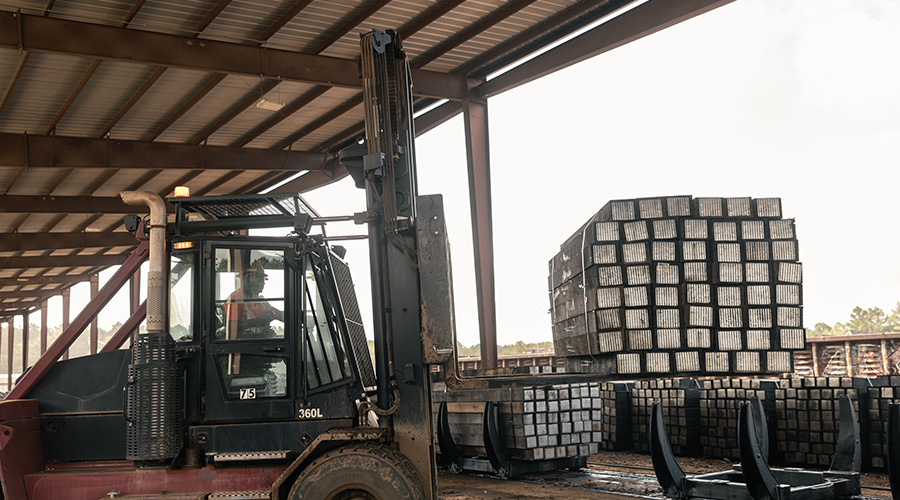 The plant treats ties with creosote and diesel. The ties then are installed throughout KCS’ former network and on CPKC track in central Canada and the United States.CPKC
Since ST&T became part of CPKC, the Class I has doubled annual production at the plant, from 350,000 in 2022 to more than 700,000 now, Foot says. Each day, the plant processes 4,000 green ties per day sourced from lumber mills and treats 2,800 ties.
Ties are treated with creosote and diesel to help prevent rotting, fungal decay and insect damage. Blending creosote with petroleum oils during treatment processes aids in controlling preservative volume and meeting deep-penetration performance standards for wood ties.
ST&T has 26 employees and treats about 60,000 ties per month. The plant provides wood ties for the former KCS network in the United States and Mexico, as well as CPKC's trackage in central Canada and the United States, says Foot.
To boost production to help meet the railroad’s tie demand, CPKC has completed several upgrades and renewed various equipment at the plant since 2023.
For example, tie sorting equipment was all new as of 2025, says Foot. The Class I also installed a new boiler for the treating facility, and added new cranes, booms and other equipment.
While it's unusual for a Class I to own a tie treatment plant, doing so enables CPKC to pivot more easily, says Foot. In addition, the railroad doesn't have to deal with awaiting its order from a third-party tie treater, which needs to juggle various Class I allotments, he says.
"This gives us flexibility and we are insulated. It allows us to focus on cost control," says Foot.