Short-line traffic in 2025: More good than bad or ugly
2/3/2026
By Jeff Stagl, Managing Editor
Last year was quite a tumultuous time in the rail industry. Yet, despite a wild economy, even wilder political landscape and uncertainties galore, many regionals and short lines fared well with traffic in 2025, including fairly strong volumes in the fourth quarter.
Collectively, small roads scored success in the full year. Through a 53-week period ending Jan. 3, 2026 (which constitutes full-year 2025 given last year’s calendar), 447 regionals and short lines registered 6,047,610 carloads, up nearly 3.4% compared with the same 2024 period, according to the RailConnect Index of Short Line Traffic compiled by Wabtec Corp.’s GE Transportation arm.
Intermodal traffic led the increase by a big margin, climbing about 14% year over year to 1,141,534 units. The other sizeable gainers by commodity group were waste and scrap materials, up 8.6% to 359,580; coal, up 5.4% to 251,867; motor vehicles and equipment, up 4.4% to 203,652; and grain, up 3.7% to 713,479.
In addition, stone/clay/aggregate carloads rose 2.4% to 684,555; lumber and forest products traffic increased 2% to 283,450; metals and products loads bumped up 1.8% to 426,456; and petroleum and coke volume inched up 0.9% to 186,214. Chemical traffic was relatively flat at 996,425 units.
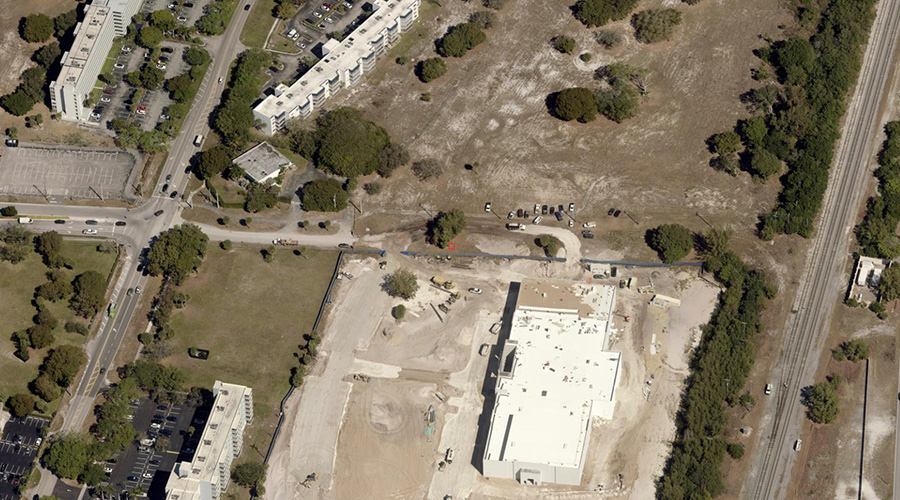
 Genesee & Wyoming Inc.’s Rochester Southern Railroad reached its 40th anniversary in December. Traffic for the holding company — which owns more than 100 regionals and short lines in North America — rose 2% in the fourth quarter.Genesee & Wyoming Inc.
Only four commodity segments posted year-over-year traffic declines: ores (totaling 141,732 units) at 14.9%; all other traffic (totaling 81,465 units) at 12.7%; farm and food products excluding grain (totaling 283,078 units) at 3.4%; and paper products (totaling 294,123 units) at 2.6%.
RailPrime reached out to a number of holding companies, regionals and short lines via email to learn how their traffic fared in 2025 and/or in the fourth quarter, and what drove or hindered their volume. Following are responses from 11 of them.
Holding companies (mostly) make hay
Genesee & Wyoming Inc. (G&W) capped off 2025 with a decent Q4, registering a 2% volume increase. Officials at the company — which owns more than 100 regionals and short lines in North America — characterized that gain as better than the overall industry average.
“This was driven by strong waste, minerals & stone and petroleum products volumes, which helped offset weak pulp & paper and agricultural volumes,” G&W officials said.
As for traffic in all of 2025, the company was adversely impacted by three paper mill closures that occurred in the year’s second half. Those closures materially impacted pulp & paper traffic, G&W officials said.
“We also experienced softer agricultural traffic, due to a mix of timing and lower wheat volumes as a result of poor harvest conditions,” they said.
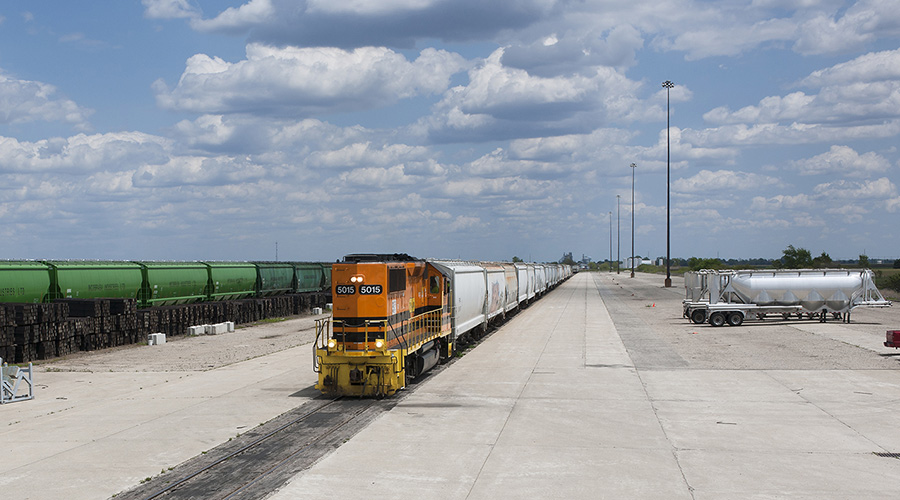
 Anthracite coal and frac sand volumes helped drive up 2025 traffic for the Reading & Northern. The regional exceeded 1 million tons of anthracite coal for the third straight year.Reading, Blue Mountain & Northern Railroad
For Watco, traffic rose 2.4% in Q4, but only inched up 0.3% for the full year. Yet, 2025 was a successful year overall for the company, which owns and operates nearly 50 regionals and short lines.
“Total carloads were the highest in the past six years, beating the prior year by just 2,365 cars,” Watco officials said.
In 2025, carloads of food products shot up 24.3% and loads of agricultural products climbed nearly 17% on a year-over-year basis, both reaching their highest level in the past six years.
In addition, crude-oil traffic shot up 13.1%, lumber/forest products loads rose 9%, chemical traffic increased 6.1% and frac sand volume ratcheted up 1.6%.
The carload decliners in 2025 were coal at 19.2%; minerals at 13.1%; metals at 5.6%; hazardous materials at 5.4%; and pulp/paper at 4.4%.
The quarter and year weren’t anywhere near as kind to OmniTRAX Inc. Q4 volume for the company — which owns and operates more than 30 regionals and short lines — fell 6%.
“The decline was primarily driven by lower steel slab and fuel shipments, along with reduced frac sand volumes reflecting softer energy market conditions,” said OmniTRAX Director of Market and Yield Management C.J. Talley. “These impacts were partially offset by growth in industrial sand, DDGs, soybeans and corn.”
In 2025, the company’s total volume dipped 4%, mostly because of the same underlying market dynamics that impacted Q4, he said.
Conversely, total volume increased in 2025 for Livonia, Avon and Lakeville Railroad Corp. (LAL), which owns and operates three short lines. Strong grain traffic helped propel overall volume, said LAL President and CEO Bob Babcock.
“But 2026 looks flat,” he said.
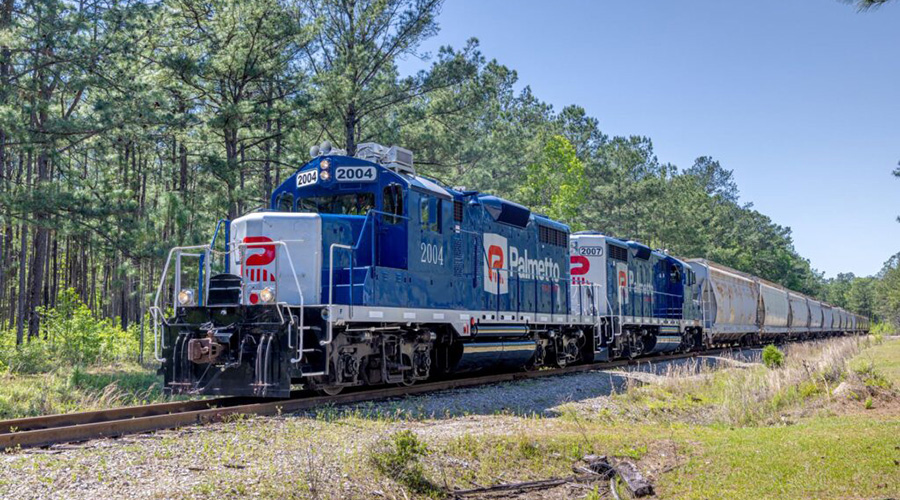 Last year, Palmetto Railways registered 91,124 carloads compared with 87,201 in 2024.Palmetto Railways
Regionals register some gains, losses
The Reading, Blue Mountain and Northern Railroad Co. (R&N) logged modest traffic growth in 2025, but it was enough for the more than 400-mile Pennsylvania regional to record its highest-ever annual revenue.
Anthracite coal and frac sand volumes helped drive the traffic gain. R&N exceeded 1 million tons of anthracite coal for the third straight year and volume in that segment climbed 25% year over year. To support that traffic growth, the railroad purchased additional covered hopper cars in December.
Although Marcellus Shale oil-drilling activity remained soft in 2025, R&N in partnership with terminal operator Texas Sands boosted frac sand business last year. Most of that growth was registered in the fourth quarter.
R&N also registered traffic gains with plastic resins, forest products, metals, and food and ag commodities. As good as 2025 was, this year might even be better, R&N officials believe.
“Based on preliminary forecasts, we expect to increase both carloads and revenues significantly in 2026,” they said.
Conrail could use a strong 2026 traffic-wise after a weak 2025. The railroad’s total volume slipped 1.3% — by 14,567 carloads from the annual traffic plan — compared with 2024’s total.
By district, North Jersey volume dipped 2.4%, South Jersey volume rose 5.5% (mostly because of strong chemical traffic) and Detroit volume plummeted 17.2% (mostly due to weak auto business), said Conrail President and Chief Operating Officer Brian Gorton.
In December alone, North Jersey volume declined 3.1%, South Jersey volume dropped 11% and Detroit volume fell 17%.
“We lost most of our ground in the fourth quarter and December saw a degradation in every district,” said Gorton. “Bottom line, the fourth quarter was not a good one.”
The quarter also was a drag for Iowa Interstate Railroad LLC (IAIS). Traffic decreased 5% for the 580-mile regional.
Although feed and intermodal volumes were strong in Q4, grain, distillers’ dried grains, cement and chemicals/hazmat/plastics loads were weak.
Luckily, the quarterly volume drop didn’t lead to a decline in annual traffic: IAIS’ total traffic in 2025 rose 3%. The drivers were corn, feed, fertilizers, containerized ag products and car storage business.
An up-and-down year for short lines
Sister railroads Red River Valley & Western Railroad Co. (RRVW) and Twin Cities & Western Railroad Co. (TCWR) illustrate the good and the bad in 2025 for small roads.
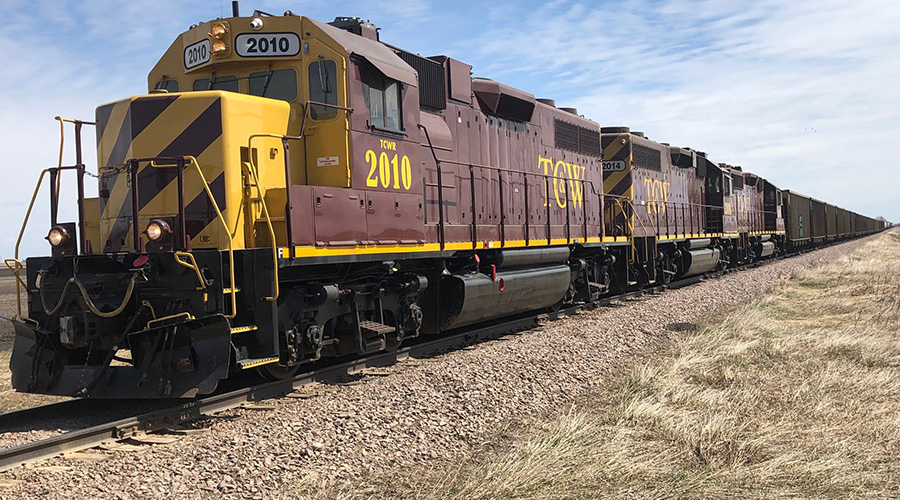
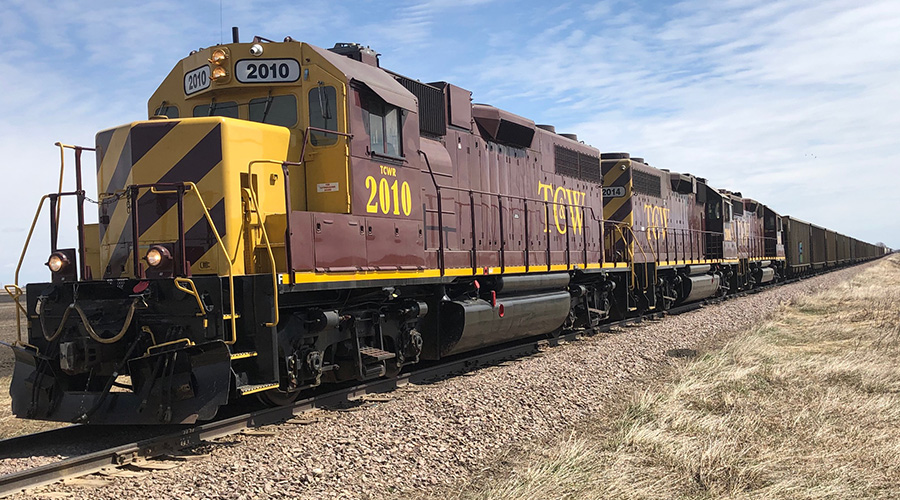 Minnesota’s largest short line, the Twin Cities & Western Railroad dealt with a 10% traffic drop in 2025 and an 11% carload decline in Q4.Twin Cities & Western Railroad Co.
RRVW, a regional that operates more than 500 miles of track in the southeast quarter of North Dakota, logged an 18% traffic gain in 2025 and a 19% traffic gain in Q4.
The increase for all of 2025 primarily was driven by a new soybean processing customer that came online in Q4 2024 and higher grain volumes driven by steady export corn demand, mostly shuttle movements of corn to the Pacific Northwest, said Victor Meyers, who serves as president of both RRVW and TCWR.
“RRVW experienced steady demand for export corn throughout the year,” he said.
However, soybeans volumes were soft because of a lack of export demand during the harvest.
Conversely, TCWR — Minnesota’s largest short line that operates 360 miles of track in both Minnesota and South Dakota — dealt with a 10% traffic drop in 2025 and an 11% carload decline in Q4.
“TCWR saw a reduction in carloads because of decreased production of corn, soybeans and sugar beets throughout the service territory,” said Meyers.
In 2025, aggregate, sugar and grain traffic fell 49%, 26% and 9%, respectively.
“TCWR transloaded a reduced amount of rock for road construction projects in 2025,” said Meyers. “The sugar reduction is driven by low sugar beet production from the 2024 and 2025 crop in Minnesota, which decreased overall sugar production in 2025.”
In terms of grain, TCWR experienced soft demand in 2025’s first three quarters, then volume improved in Q4 after increased corn and soybean production from the 2025 harvest.
For the Paducah & Louisville Railway Inc. (PAL) — which also incorporates carloads generated by the Evansville Western Railway Inc. and Appalachian & Ohio Railway — traffic fell 10% in Q4 to 28,408 units and declined 4% in 2025 to 125,076 units.
Waste and scrap loads skyrocketed by 237% in the quarter and 157% in the year, and grain and paper carloads were very strong in 2025. But the 280-mile Kentucky short line experienced weak demand in a number of commodities in both periods.
These five commodities fell by double-digit percentages in Q4: food products (-45%); crushed stone (-34%); automotive (-30%); lumber (-25%); and petroleum products (-24%). And in 2025, these four commodities dropped by double-digit percentages: other carloads (-33%); food products (-19%); crushed stone (-17%); and lumber (-15%).
The biggest negative impact last year? A coal move that happened in 2024 but didn’t occur in 2025, said PAL Vice President of Marketing and Sales Kevin McEwan.
“We had depleted an inventory stock pile for Southern Company, and they didn’t renew their storage contract with the terminal that it moved from. Other than that our domestic coal moves were actually up or flat,” he said.
Auto volume was down due to a fire at the Novelis plant in New York that supplies aluminum to Metalsa in Elizabethtown, Kentucky, where Ford F150 frames are manufactured.
“We took that hit in Q4,” said McEwan.
Meanwhile, there were positives and negatives for the Chicago South Shore Railroad (CSS) last year. In December, the short line moved about 1,000 more cars than it had planned.
“Steel moves were stronger than expected,” said CSS President Todd Bjornstad, adding that overall, it was a “decent” Q4.
But in 2025, the short line moved about 49,000 carloads, a total that essentially matched 2024’s count.
The 2025 traffic outcome was better for Palmetto Railways. The South Carolina short line registered 91,124 carloads versus 87,201 carloads in 2024.
The year-over-year gain primarily was driven by higher volumes of food, hazardous materials, machinery and steel.
“Steel manufacturing has been up at a large plant; we believe this has to do with tariff impacts on that industry,” said Palmetto Railways President Patrick McCrory.
Chemical manufacturing was up last year, but chemical international transloading was down due to tariff impacts, he said. Likewise, tariffs reduced automotive exports.