Norfolk Southern leverages REDI Sites program to build pipeline of rail-served sites
6/17/2026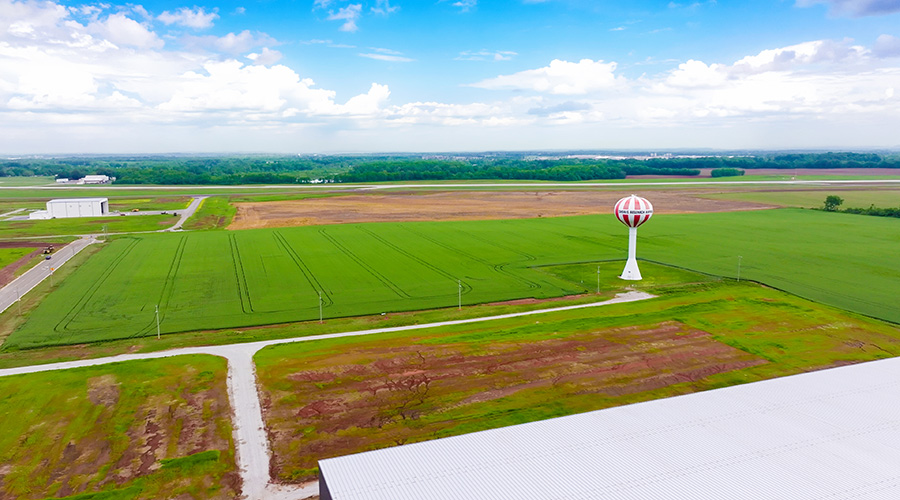
By Bridget Dean, Senior Associate Editor
In May, the Site Selectors Guild (SSG) shared its latest slate of certified development-ready sites through its Readiness Evaluation and Designation Initiative (REDI) Sites program. Thirteen are located along Norfolk Southern Railway’s tracks, giving the Class I a pipeline of rail-served sites to support long-term freight volume growth.
An association of site selection consultants, SSG launched the REDI Sites program in 2024. It’s the first nationwide third-party evaluation framework for site assessments. Historically, site assessment requirements for prospective developments ranged widely by state or community.
Following a thorough review of sites’ infrastructure capacity, development feasibility, ownership and workforce availability, the SSG issues certifications to qualifying sites. There are five tiers of distinction based on their readiness: platinum, gold, silver, bronze and emerging.
The latest slate of certified properties brings NS’ portfolio of rail-served sites with a REDI designation to 24.
The REDI Sites program provides prospective shippers with third-party-validated information about each site, including availability of transportation services and how much work adding transportation infrastructure would be. The certifications carry credibility with corporate decision-makers, said NS Director Industrial Development Marybeth Flournoy said in an email.
Adding rail infrastructure to a project too late in the development process can result in inefficient track layout, which subsequently leads to increased costs, longer buildout and limited operational capabilities, said Flournoy. Through its participation in REDI Sites, NS adds rail and supply chain considerations into the site evaluation process from the start.
NS’ industrial development, engineering, network planning, commercial and marketing teams work collaboratively with external partners to submit sites along and near the NS right-of-way for SSG review.
The Class I also partners with state and local economic development organizations, utility providers, private developers, landowners and site selection consultants to integrate rail planning into the site development process early on, Flournoy said.
“This ecosystem approach is critical because site readiness today depends on alignment across multiple partners, not just physical site characteristics,” she added.
The Virginia Transformer project at Shoals Research Airpark in Colbert County, Alabama, is a recent example of a REDI Sites project that required scale and supply chain precision, she said. The Shoals Research Airpark received a platinum designation through the REDI Sites program in January. Virginia Transformer on May 19 announced plans to build a 600,000 square-foot, rail-served power transformer plant at the industrial park.
Demand for advanced manufacturing, mining, energy infrastructure, grid expansion and artificial intelligence are driving increases in electricity consumption, NS officials said in an article on the company’s online Story Yard platform.
The backbone of the grid is custom-built large power transformers, often moved best by rail because the transformers exceed standard shipping dimensions. For Virginia Transformers, finding a suitable rail-served site was critical. The company’s decision to locate in Colbert County was influenced by the site readiness approach from local, state and private partners, NS officials said.
“More broadly, the expanding REDI portfolio — now spanning multiple states across Norfolk Southern’s network — reflects a growing pipeline of sites that are positioned to compete for these kinds of projects by reducing uncertainty and compressing development timelines,” Flournoy said.
She expects to see more companies leverage pre-vetted sites where rail, utilities and local partners are already aligned to speed up the development process. Flournoy describes NS’ pipeline of shippers seeking rail-served sites as “healthy and diverse” with momentum in the industrial sector. So far this year, NS has reviewed about 400 qualified opportunities for new facilities, 85 of which are in the design or construction phases.
The metals and construction sectors are leading the way in developing new sites, followed by agriculture, consumer products and forest products, Flournoy said.
“Overall, it’s a well-balanced pipeline that mirrors broader economic shifts toward domestic manufacturing, supply chain resilience and strategic site readiness,” she said.


