Short-line traffic in Q3? Not great, but not terrible, either
11/4/2025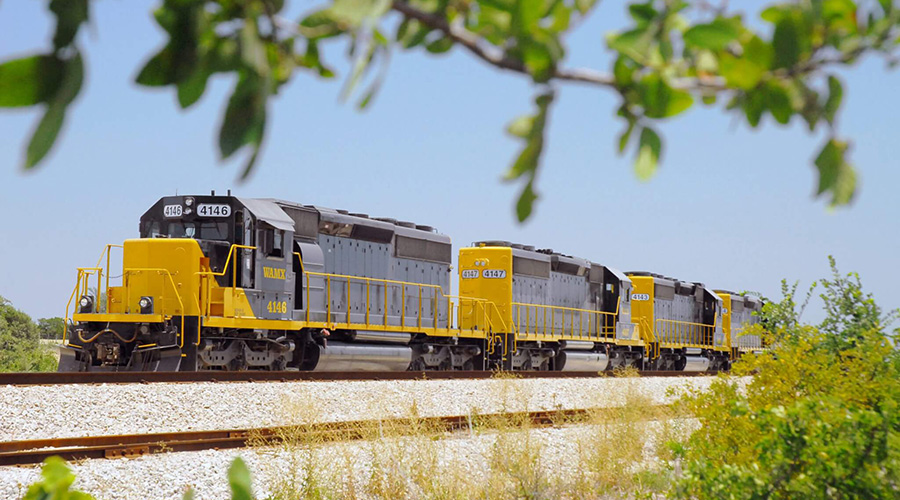
By Jeff Stagl, Managing Editor
If there’s one word that best describes regionals’ and short lines’ traffic both in the third quarter and through three quarters, it’s “lackluster.”
According to the RailConnect Index of Short Line Traffic compiled by Wabtec’s GE Transportation arm, the carloads registered collectively through three quarters by 461 small railroads totaled 4,644,773, up just slightly more than 1% year over year. The index covers a 40-week period through Oct. 4.
Of the 14 commodity groups tracked by the index, an equal seven posted gains while seven logged declines. Intermodal was the only group that reached a double-digit percentage gain. Through three quarters, the small railroads handled 857,242 intermodal loads, an 11.2% jump compared with the same 2024 period.
The other commodity groups in the black were waste and scrap materials, up 5.3% to 271,926 units; coal, up 3.7% to 204,636 units; grain, up 2.9% to 536,181 units; motor vehicles and equipment, up 2.1% to 157,570 units; and lumber and forest products, up 1.1% to 221,386 units. Stone, clay and aggregates traffic was relatively flat, up less than a tenth of a percent to 530,160 units.
Meanwhile, there were two big decliners: “All other” traffic plunged 18.4% to 62,482 units and ores volume fell 16.7% to 108,362 units. The other groups in the red were farm and food products (excluding grain), down about 4% to 215,179; paper products, down about 3.6% to 226,926; chemicals, down about 3% to 766,875; petroleum and coke, down about 1% to 142,808; and metals and products, down 0.3% to 343,799.
The holding companies, regionals and short lines contacted by RailPrime similarly are split when it comes to their traffic outcomes through three quarters and in Q3. For example, among holding companies, Genesee & Wyoming Inc.’s (G&W) carloads increased, Watco’s and Livonia, Avon and Lakeville Railroad Corp.’s (LAL) were flat, and OmniTRAX Inc.’s declined in the third quarter.
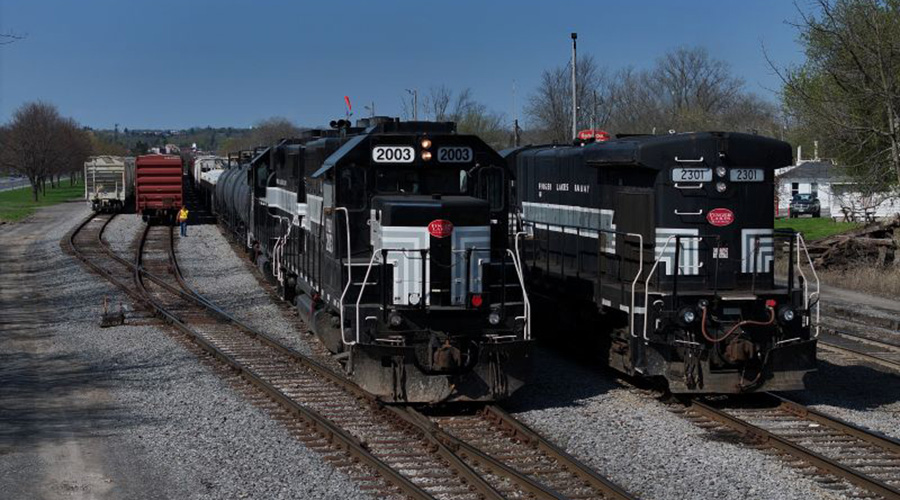
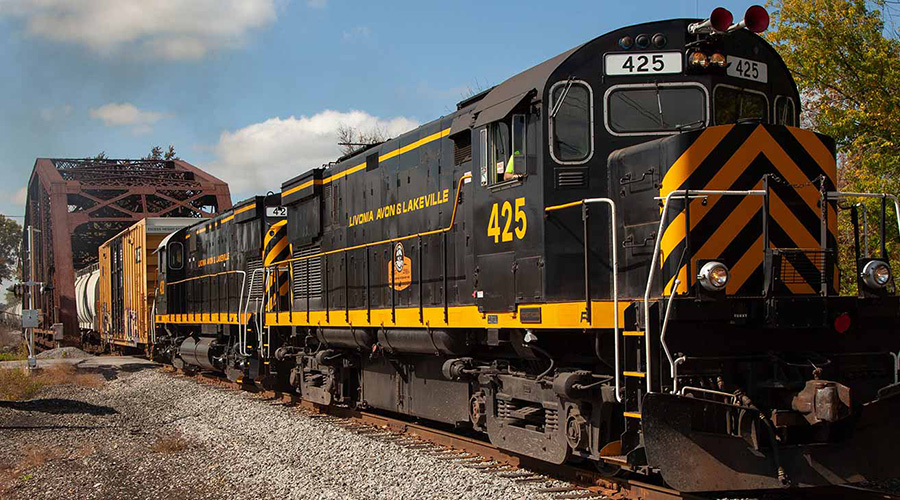 Traffic was flat in Q3 for Livonia, Avon and Lakeville Railroad Corp., which owns B&H Rail Corp., the Western New York & Pennsylvania Railroad and Ontario Midland Railroad.Livonia, Avon and Lakeville Railroad Corp.
 Following is information and comments about Q3 and year-to-date traffic that was emailed to RailPrime by 10 holding companies, regionals and short lines.
Strengths and weaknesses
Excluding intermodal, G&W's traffic in each month of the quarter rose slightly primarily because of strong waste and energy (coal and petroleum products) shipments, said company spokesman Tom Ciuba.
“All of our traffic reporting publicly typically excludes intermodal. It’s not a core commodity for us, as short line franchises, in the same way it is for Class Is,” he said.
G&W noted weakness in the lumber market and had difficult year-over-year comparisons for minerals and stone traffic due to some large projects that were handled in 2024.
At Watco, there was only a 59-carload difference when comparing traffic in the third quarters of 2024 and 2025. But when comparing Q3 volume to Q2 volume, carloads weren’t flat — they dipped 1.4%.
Volume was hampered by flooding that occurred in July along track operated by Watco’s Austin Western Railroad in Texas. The short line couldn’t operate for several weeks while damaged track was rebuilt.
“This railroad averages 5,400 carloads per month, and in July only moved 730,” Watco officials said. “The railroad had recovered to normal traffic patterns as of September.”
Overall, Watco in the quarter noted promising movements of minerals and agricultural products, but softness in coal and chemical movements.
 Twin Cities & Western Railroad’s carloads fell 15% through 2025’s first three quarters, mostly because grain and sugar volumes plunged 19% and 37%, respectively, in the period. Twin Cities & Western Railroad
 “It’s worth noting that with the addition of the Great Lakes Central Railroad in October, our fourth-quarter numbers will be skewed as we add those carloads to the mix,” Watco officials said, referring to the Michigan short line the company recently acquired, which launched operations on Oct. 1.
Traffic also was flat in Q3 for LAL, which owns and operates B&H Rail Corp., the Western New York & Pennsylvania Railroad and Ontario Midland Railroad.
“An increase in food products (sugars, flour, grain) was offset by a drop in energy-related traffic (frac sand and pipe),” said LAL President and CEO Bob Babcock. “Drilling activity is slow in Pennsylvania this year.”
For OmniTRAX, Q3 carloads declined 4% primarily because of stalled shipments of fuels and frac sand. Through 2025’s first three quarters, the company’s volume dropped 3% year over year.
“The decline was primarily driven by reduced steel slab and fuel shipments and lower frac sand volumes tied to softer energy markets,” OmniTRAX officials said. “Offsetting this were gains in industrial sand, DDGs, soybeans and corn shipments.”
Results vary among regionals
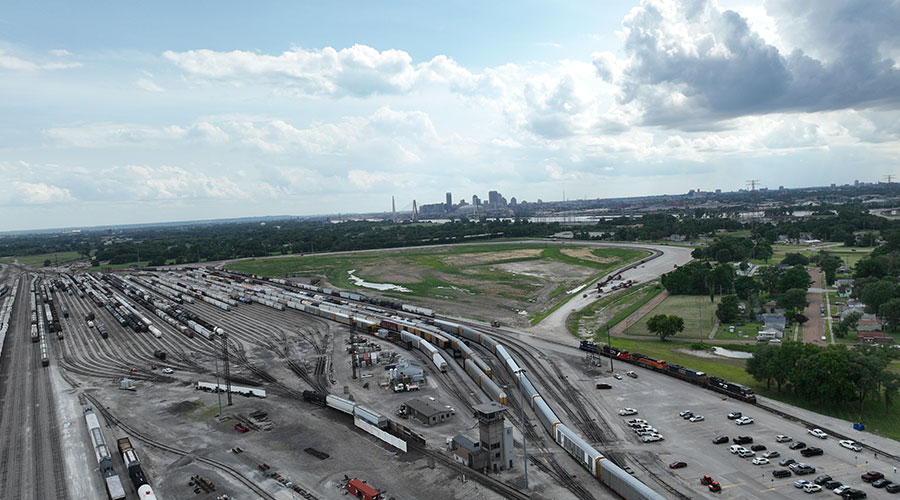
 From January through September, the average number of rail cars stored daily by the New Orleans Public Belt Railroad increased to 1,561 cars. New Orleans Public Belt Railroad Co.
 Among regionals contacted by RailPrime, the Red River Valley & Western Railroad (RRVW) notched a 10% year-over-year traffic gain in Q3. The increase mainly was driven by a new soybean processing customer that came online in fourth-quarter 2024 and higher grain volumes, said RRVW President Victor Meyers.
Through 2025’s first three quarters, the regional’s traffic shot up 17%.
“Grain carloads are up 36% year over year, driven by strong shuttle movements of corn to the Pacific Northwest for export,” said Meyers.
But Q3 and the three-quarter period weren’t kind to RRVW’s sister railroad, the Twin Cities & Western Railroad (TCWR). The short line’s carloads fell 10% in the quarter and 15% in the period. The primary reasons? Grain and sugar volumes have plunged 19% and 37%, respectively, so far in 2025.
“TCWR saw strong domestic demand for grain for the first three quarters of 2024, however increased grain production from the 2024 harvest in states south of Minnesota are currently fulfilling demand that customers supplied last year, which is decreasing grain originations,” said Meyers, who also serves as president of TCWR.
The drop in sugar volume was caused by low sugar beet production from the 2024 crop in Minnesota, which is hampering overall sugar production so far in 2025.
Overall, grain prices from RRVW origins have remained lower compared with TCWR origins, Meyers said. The lower prices combined with the lower 2024 crop production in TCWR’s service territory have driven strong export volumes for RRVW in 2025.
“TCWR’s service territory saw strong domestic demand for grain in 2024, but that demand has softened as a result of increased crop production closer to the destination markets,” said Meyers.
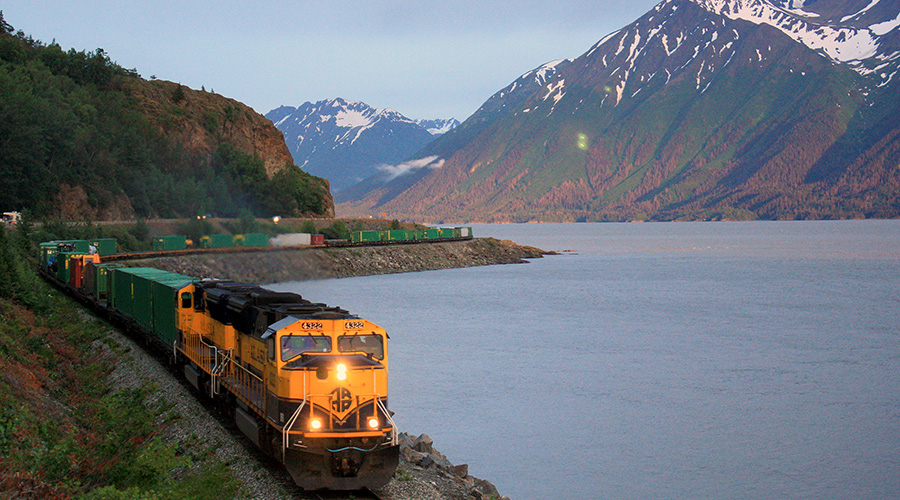 Alaska Railroad’s traffic through three quarters fell 12.3% primarily due to project timing and lower northbound rail-barge volumes. Alaska Railroad Corp.
Conversely, Iowa Interstate Railroad LLC’s grain traffic was strong in Q3, increasing 6.9%. That helped the 580-mile regional register a 7.4% carload gain in the quarter. Volumes grew in the intermodal, chemicals/fertilizers and ethanol sectors, too.
However, another regional situated in the far north has had a trying 2025 so far. The Alaska Railroad Corp.’s traffic through three quarters was down 12.3%.
“This decline was primarily due to timing and completion of projects and lower northbound rail-barge volumes relative to 2024,” Alaska Railroad officials said.
Noticeable traffic trends
The volume news is better far to the south at the New Orleans Public Belt Railroad Co. (NOPB), at least in terms of rail-car storage figures. Through three quarters, the railroad’s average daily storage count reached 1,561 cars, which is a year-over-year improvement, NOPB officials said.
But in terms of interchanged cars, the railroad registered 88,381 cars through three quarters, a year-over-year decrease. In Q3, NOPB interchanged 29,255 cars versus 29,882 in Q2 and 29,444 in Q1.
“The decrease in interchange traffic is an industry trend,” NOPB officials said.
The trend at Sierra Northern Railway — which has been going strong for all of 2025 so far — is mounting traffic. Through three quarters, the northern California short line registered a 5% gain in carloads year over year.
“We have been really busy out here in California. Business is still good and we are seeing continued growth over 2024,” said Kennan Beard, Sierra Northern’s president and CEO. “To date, this has been all organic growth with existing customers. We have recently brought a new customer on line and expect the numbers to grow for the remainder of 2025.”
What has been a pleasant surprise of late is no traffic impacts so far from any tariffs issued by the Trump Administration.
“The feared tariff situation earlier this year has not created any real issues for us,” said Beard.