LA ports: BNSF drives down terminal dwell; RFP poses rail services provider change
7/28/2025
By Jeff Stagl, Managing Editor
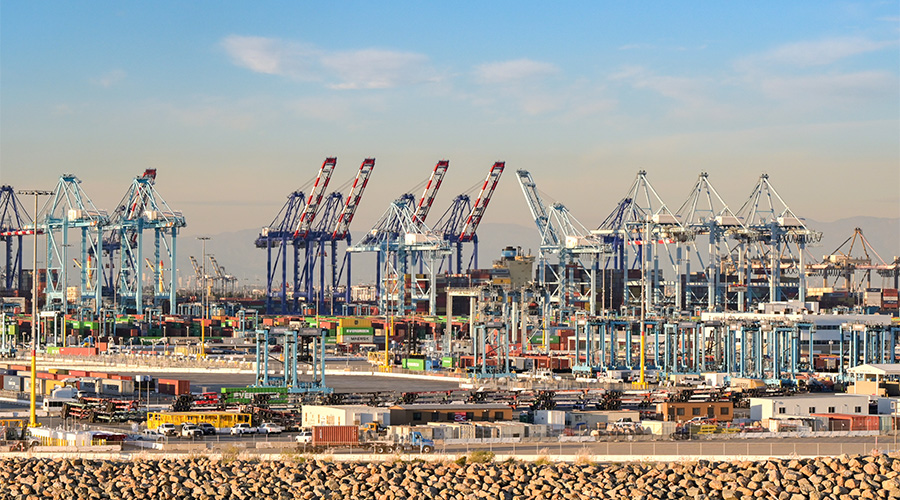
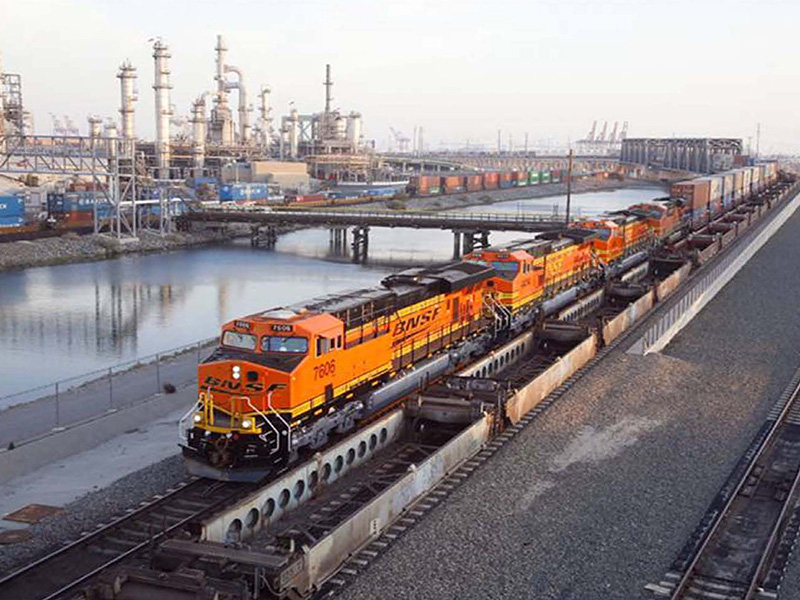
When to comes to container flow at the major southern California ports in Los Angeles and Long Beach, June was a particularly good month for BNSF Railway Co.
The Class I’s average marine terminal dwell — which measures the days a container sits on a dock after its unloaded from a ship and before it departs on a train — reached three days in June, the railroad’s best mark at the port complex since December 2021.
“That’s our lowest terminal dwell since pandemic lows, while handling considerably more volume,” BNSF officials said in an email.
A number of factors helped contribute to the low dwell, including continued investments in the railroad’s network, the prepositioning of trains, close collaboration and integration with the ports and the recent launch of the new Alameda Belt Line (ABL), they said.
A joint venture between BNSF and Union Pacific Railroad that launched in early summer, ABL serves as a neutral third party. It’s charged with optimizing freight mobility in and out of the ports via the Alameda Corridor, a 20-mile freight-rail expressway between the ports and downtown Los Angeles.
ABL features 24/7 integrated dispatching from the ports to the top of the corridor; an in-house law enforcement team that works with local police; real-time monitoring to help balance freight flows; and the deployment of the latest technological advancements and data-driven solutions to help improve rail operations at the ports.
“We’re excited about this partnership because it brings together the latest technology and better access to information. This means we’ll see more efficiency at the San Pedro Bay ports complex and along the Alameda Corridor, giving us a real edge in global freight mobility,” said ABL CEO Martin Yarnall on the joint venture’s website.
ABL will strive to simplify and streamline operations between the ports and Redondo Junction; establish a fully integrated and unified operating plan; reduce dispatching and handoff inefficiencies to increase capacity; and lower transportation costs through more efficient operations and new technologies. Although it’s only been in place a short time, the joint venture already is generating results, BNSF officials said.
“Since launching, we have handled record level volumes with better velocity through the Alameda Corridor,” they said.
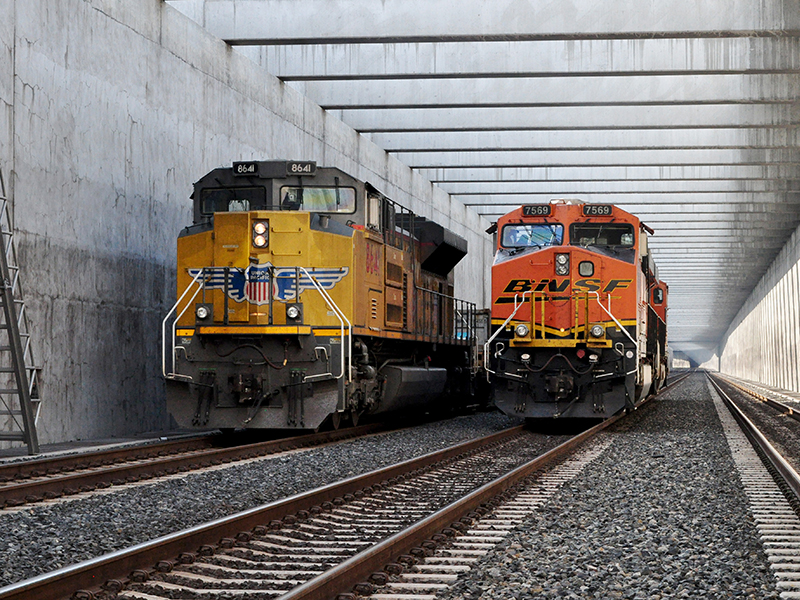
In terms of investments that have helped reduce terminal dwell, BNSF cites dollars spent on capacity, technologies, crews and its Southern Transcon route between Los Angeles and Chicago.
“The Southern Transcon is now 99.98% double, triple or quadruple tracked,” BNSF officials said.
The Class I also has added 8,000 parking spaces at its intermodal hubs, and last year, completed the addition of 40,000 feet of processing tracks at its Belen, New Mexico, terminal to improve throughput at a crucial location for train inspections, refueling and crew changes.
Meanwhile, BNSF of late has more closely collaborated with the ports and integrated efforts between the three parties.
“We have operators co-located in the complex, coordinating hourly tactical plans, including positioning of rail cars to match outbound demand,” BNSF officials said.
Moreover, the railroad has dedicated directors who coordinate efforts with both marine terminal operators and steamship lines on weekly plans to ensure resources are in place to meet customers’ demands.
“We also have strong executive level relationships with the executive directors and leaders of the terminals, where we have regular touch points throughout the year,” BNSF officials said.
Going forward, BNSF plans to keep emphasizing the same efforts to keep terminal dwell in check.
“Continued collaboration and communication with the ports, our customers and stakeholders, and proactively prepositioning our network with extra staged locomotives and rail cars in key locations to be prepared for the unexpected at any time [will be key],” BNSF officials said.
While BNSF works on its terminal dwell processes, the ports are working on a potential change in their rail switching, maintenance and dispatching services provider. For the past 27 years, Pacific Harbor Line (PHL) has provided those services, but the short line’s contract with both ports is set to expire at year’s end.
The ports have issued a request for proposals (RFP) seeking submissions from prospective short-line operators interested in providing railroad operating and maintenance services within the San Pedro Bay ports complex. Proposals were due July 28.
Although they are administered separately by their own harbor departments, the ports are served by the same short line, which facilitates intermodal services for terminals in both ports.
Owned by Anacostia Rail Holdings, PHL has served as the complex’s service provider since the last joint contract was bid in 1998. The short line employs nearly 200, operates 96 track miles and 19 route miles of track, and serves nine on-dock marine terminals.
PHL was created to unify operations in the port complex. After container traffic grew exponentially at the ports in the 1980s, they sought a neutral entity that would act in the best interests of all parties involved at the complex, including Class Is, marine terminals and carload customers.
In 1995, the ports selected Anacostia as the winning bidder. Anacostia then created PHL, which launched full operations at the Port of Los Angeles and Port of Long Beach in February 1998 and August 1998, respectively.
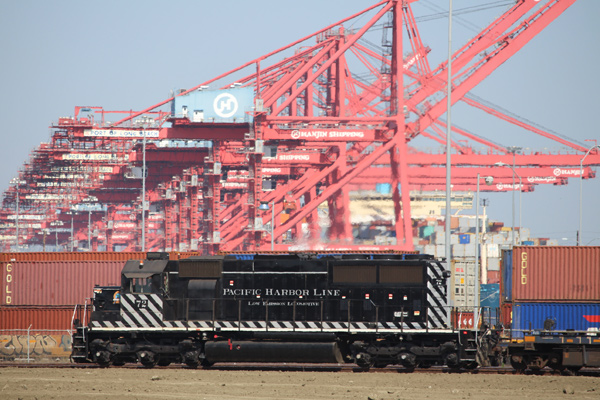
The short-line operator chosen by the ports through the RFP will provide carload and intermodal rail services for all terminals, including rail-car interchanges with BNSF and UP. In addition, the operator will handle dispatching services — including a seamless interface with the Alameda Corridor — and maintenance services for the ports' rail facilities, such as track within the complex.
Although the ports will jointly select a single operator through the RFP, each will enter into a separate operating agreement with the chosen bidder.
The initial term of the operating agreement will be 10 years, but up to two 5-year extensions and a third extension could be negotiated that would push the contract’s expiration date to July 31, 2048, says Tom Becker, the Port of Long Beach’s manager of intermodal operations.
“The extension terms are subject to mutual agreement between the parties,” he says.
Proposals will be evaluated based on certain criteria, including general qualifications, operating and business plans, environmental performance, rates and a zero-emission strategy, such as progress with the deployment of zero-emission locomotives.
The current contract with PHL will expire on Dec. 31, but the ports are in the process of extending it by one more year to Dec. 31, 2026, says Becker.
“It will take time to complete the RFP process and the subsequent individual agreement negotiations with each port,” he says.