Finger Lakes Railway develops online tools to help shippers learn about rail
10/21/2026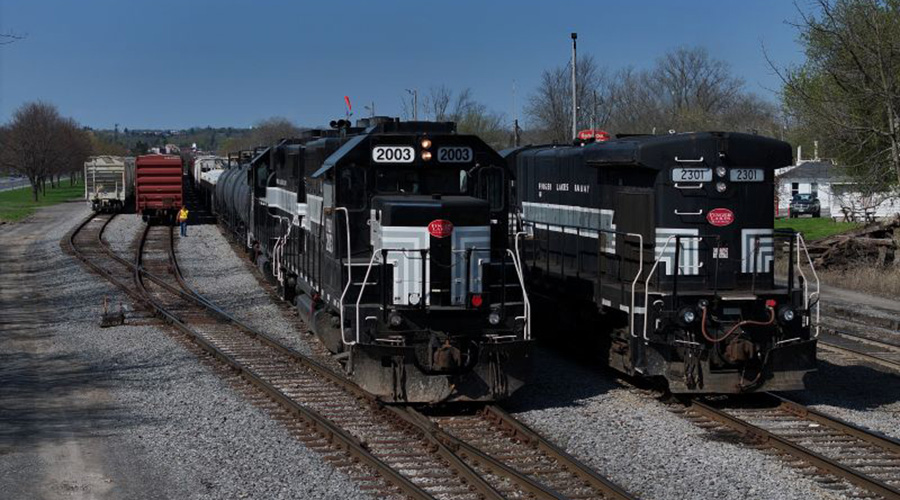
By Bridget Dean, Senior Associate Editor
For first-time rail shippers, the freight-rail industry can appear overly complex and jargon-laden. Upstate New York-based Finger Lakes Railway (FGLK) hopes to simplify the process by serving as a low-barrier entry point for companies that currently use trucking or are searching for an optimal facility location.
Since 1995, FGLK has connected local businesses with the national rail network. It serves more than 90 customers across more than 150 miles of track. The railroad also operates nine transload sites and maintains a roster of rail-ready industrial development sites.
As a short line, FGLK is particularly well positioned to provide potential customers with the hands-on guidance, connections and local expertise needed to help them get started with rail, says Jason Kerkezi, FGLK's vice president of marketing and sales.
"There is a steep learning curve to rail. I think once shippers understand the nuances of using rail, it becomes a day-to-day function," he says.
Kerkezi joined FGLK seven months ago with nearly 20 years of Class I experience at CSX under his belt. Drawing on that experience and the decades of local expertise of his new colleagues, Kerkezi modernized and redesigned FGLK's website to serve as a simple yet comprehensive guide to rail shipping for potential customers.
Easy cost comparisons
The only way to know if switching to rail will save a company money is to get a rail rate. But, that first step can be daunting for companies that don't know all the variables needed to determine rates, such as the type of rail cars needed or where they'll be leased from. Equipment and billing codes are often points of confusion for first-time shippers, Kerkezi says.
 The new website offers guidance to potential shippers about whether rail is a good fit for them.fingerlakesrail.com
FGLK's "request-a-rate" function allows potential shippers to submit known details about their freight without requiring all the information up front. The short line's commercial team reviews requests and, if necessary for the desired route, reaches out to the short line's two Class I partners, Norfolk Southern Railway and CSX, to establish initial connections between the parties.
"A lot of times, customers don't know where to start. Short lines can be that first point of contact and help guide them and educate those potential shippers to get to that comfort level," Kerkezi says.
Another new feature on FGLK's website: a truck-to-rail cost conversion calculator. Companies that aren't ready to request a rate can use the calculator to obtain a planning-level breakdown of freight shipping costs between rail and truck.
While cost comparison and emissions calculators are not new to railroads, FGLK's calculator prioritizes customizability to show the difference between users' existing costs and the short line's approximate rate, Kerkezi says. Users can input their truck rate, commodity, and volume per truck or rail car, among other variables.
"All those things ... the user can manipulate to try to arrive at the most accurate number," he says. "It's meant to give [customers] a guideline and get the interest going so that they pick up the phone and we move forward on shifting traffic to rail."
 The calculator enables users to input their variables to see an estimated breakdown in costs between rail and truck shipments.fingerlakesrail.com
While designing the new layout, Kerkezi considered what potential customers and site selectors would want. As a result, the new site features interactive site maps and step-by-step guides to getting started. The website modernization also boosted FGLK's online visibility by making sure it was showing up in relevant search results and Google rankings, Kerkezi adds.
Expanding FGLK's reach
The website and planning tools are part of FGLK's strategy to keep converting traffic from truck to rail, but a lot of growth comes at the grassroots level through relationships, Kerkezi says.
FGLK is always communicating with its existing portfolio of customers about expansion and growth opportunities, he says. The railroad also exchanges leads with its Class I partners, fellow short lines and local economic development organizations.
Kerkezi is one of two people on FGLK's commercial team; his partner, Bruce Habberfield, has served the railroad since it was established.
"Bruce is a perfect example of a railroader who understands his territory, understands the service Finger Lakes can offer," Kerkezi says. "[He] has those local connections that he's cultivated over many years, and that's something you can't replicate."
Kerkezi hopes the modernized website will increase awareness of FGLK and its various value-added services, specifically the industrial development sites and transload locations.
During his tenure at CSX, he observed many short lines grow through transloading operations, especially in the last decade, he says. Pursuing nontraditional customers — businesses that are unfamiliar with using rail because they don't have direct access — is key to FGLK's growth strategy.
"We provide that first level of contact. Everything around the website, whether it's a calculator or the request-a-rate function, it's all meant to serve one purpose, which is to get that conversation going with us," says Kerkezi.