Watco's KO Railroad helps pipe manufacturer lay foundation for growth at new Kansas facility
12/11/2025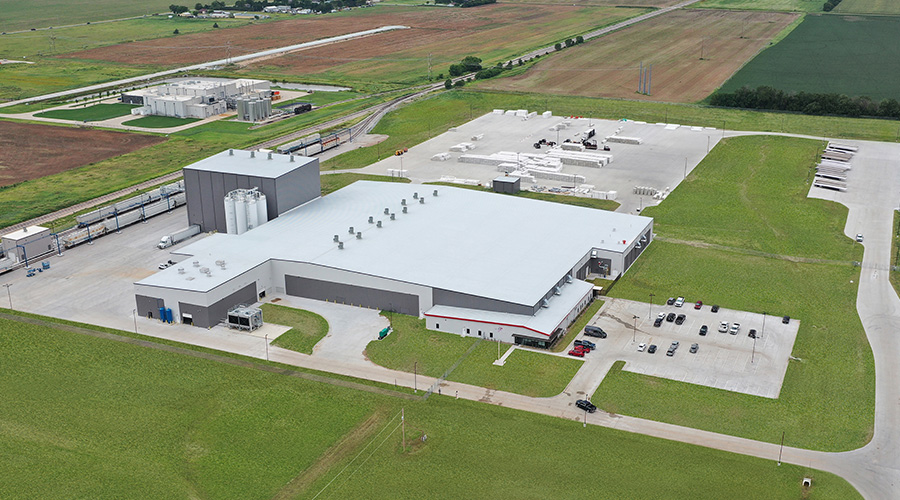
By Bridget Dean, Associate Editor
When selecting the location for its newest manufacturing plant, Charlotte Pipe and Foundry Co. sought short-line railroad access in part because of the industry’s reputation for being flexible and customer focused. Charlotte Pipe found the short-line partner it was looking for in Watco’s Kansas & Oklahoma Railroad (KO), which earlier this year helped open the company’s new rail-served facility in Maize, Kansas.
The Maize location produces plastic pipes for Midwest markets. The markets were previously covered by Charlotte Pipe’s Cameron, Texas, facility, but growing demand in the South put that plant at capacity even after three site expansions. Charlotte Pipe opted to build a facility that could establish the company’s presence in northern states and fill a gap in its distribution, says Brad Muller, vice president of corporate communications at Charlotte Pipe.
Finding the right site, grading it and constructing the $80 million, 134,000-square-foot facility took nearly three years, he says. Maize, Kansas, was an attractive location for several reasons, including the state’s right-to-work laws, low electricity costs and its central location to Midwest markets. Rail access in the region via KO was another factor.
Watco designed the rail spur layout, going through several iterations before settling on a layout that best accommodated the facility’s planned expansions. The spur features turnouts on the facility’s east and west sides, directly off the KO mainline. The turnouts connect to a double-track siding, with about 3,000 feet of rail and room for 28 rail cars to be unloaded pneumatically, according to KO General Manager Ed Verlanic.
“We tend to build what we need with plenty of room to grow. The design of that rail spur has to take into account, what will this site look like in the future — five, 10, 25 years down the road?” Muller adds.
Charlotte Pipe’s primary raw material is resin in pellet form. The company opts to receive the material in bulk rail shipments rather than by truck, reducing costs and the number of weekly shipments to process. Pellet resin shipped by truck also comes packaged in bags, which would be less efficient to unload and create excess waste, Muller says.
The facility was still “ramping up” production as of early December; it currently receives four to five rail cars of resin via rail per week, says Muller. Finished pipe products are shipped by truck to local markets.
“[Watco was] very helpful during the startup of the plant,” he adds. “Things are stopping and starting. You’re trying to work through the bugs and the kinks. So, to have the rail partner offer flexibility and understanding in that process was very helpful.”
Based on the company’s experiences with rail service at other plant locations, short lines have been flexible about car unload time and willing to collaborate on projects like the Maize facility rail spur, Muller says. The successful partnership showcases why Charlotte Pipe sought short-line access in Maize and plans to do so with future sites.
“[Short-line service] is now a factor in our plant site locations,” Muller says.