UP's Vena: STB's 'incomplete' call on merger application only a minor setback
1/27/2026
By Jeff Stagl, Managing Editor
It’s much more of a mole hill than a mountain. Only a slight blip and a small delay.
That’s how Union Pacific Railroad CEO Jim Vena characterizes the Surface Transportation Board’s (STB) decision handed down Jan. 16 that deemed the UP-Norfolk Southern Railway merger application as incomplete.
Although the Class Is now will spend some additional and unexpected time to revise portions of the application, the STB’s determination won’t have a huge impact on the merger’s regulatory timeline, Vena said during a phone interview conducted today a few hours after UP held its fourth-quarter earnings conference.
The board found the application doesn’t contain adequate future market share projections, doesn’t include certain schedules and documents that are expressly made part of the merger agreement, and is missing certain other details, such as clearer details on any implications for the Terminal Railroad Association of St. Louis.
UP and NS are disappointed with the STB’s decision, given the time and effort that went into producing the 7,000-page application that was submitted to the board on Dec. 19. But the board’s determination is understandable, Vena says.
“Because of this merger’s significance and size, we figured they would turn back some [of the application],” he said. “What they are asking for? I’m good with it.”
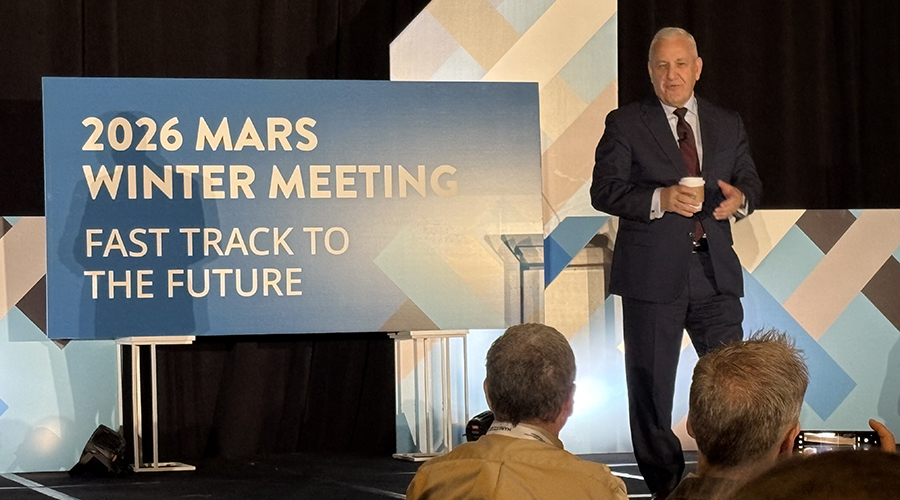 Vena remains confident that the merger will pass regulatory muster. UP and NS expect the STB to issue a final decision on the merger in 2027’s first half. .Jeff Stagl
Various experts now are working on the revisions and UP and NS expect to resubmit the application sometime in March. The STB then will have 30 days again to determine if the revised application is complete.
“We want to give them more than what they’re asking for. We don’t want it to come back again,” Vena said.
The Class Is will lose about 30 to 45 days in their anticipated regulatory timeline due to board’s determination, but a final STB decision on the merger still might be forthcoming within the first half of 2027, he believes.
“If it was ‘Vena’s STB,’ we could get this thing done by my birthday in summer, but it’s not ‘Vena’s STB.’ We will be thorough, so be it,” he said. “We will answer the key questions and make sure we do it right.”
Vena remains confident that the merger will pass regulatory muster.
“I am a CEO, so I better have high confidence,” he joked.
Plus, NS leaders are confident, too. The merger continues to present a compelling case for providing benefits to so many constituents, and he said he’s convinced UP and NS have done a good job of demonstrating the deal’s advantages.
For one, it would provide shippers more rail options. UP-NS would “not be afraid” to compete with other railroads, Vena said.
“I’m all about competition. Customers should have optionality if other railroads are not delivering,” he said.
To the naysayers and critics — who might believe the STB’s decision leans towards proving the merger is a bad idea — Vena says it helps to keep a thick skin. That’s something he’s had over his entire career spanning more than 40 years, including a long stint at CN, he stressed.
For example, one time before Christmas he received a package at his home from someone he didn’t know. When he opened it, the package contained a fake snake with a note stating, “You are a snake.” But that didn’t phase Vena.
“At the end of the day, it didn’t bother me at all. It went straight to the dumpster,” Vena said.
Similarly, the STB’s decision doesn’t phase him, either. It should be “an easy fix” and then UP and NS will move on, Vena said.
“The devil’s in the details. Let’s get through the details,” he said. “I’m not worried.”