Minnesota, New York short lines win state grants to bolster operations
1/14/2026
By Jeff Stagl, Managing Editor
On Jan. 6, the Minnesota Department of Transportation (MDOT) awarded more than two dozen grants totaling $76.2 million through three competitive grant programs, including the Minnesota Highway Freight Program (MHFP).
Through that program, MDOT encourages railroads, cities, counties, ports, waterways, airports, tribal governments and state districts to apply for funding to help fund transportation projects that benefit freight movements, intermodal connections, safety or efficiency across various modes.
Freight transportation projects that can receive grants through the MHFP include first- and last-mile project; rail line and grade crossing improvements; intermodal projects involving rail, airports, transfer stations, ports and waterways; and freight transportation plans or studies.
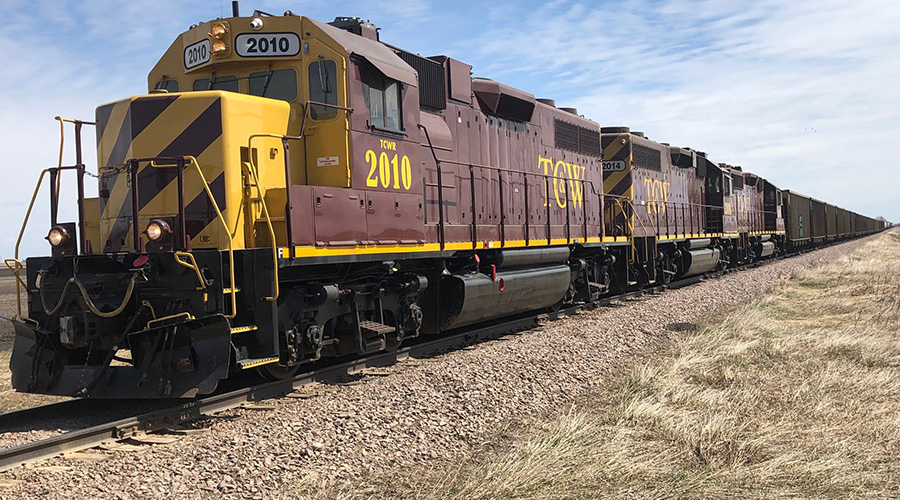
One winner of a MHFP grant is the Cloquet Terminal Railroad (CTRR), which operates 6 miles of track in Cloquet, Minnesota, and interchanges with BNSF Railway and CPKC. Owned by packaging, pulp and specialty/graphic paper producer Sappi North America, the short line serves the company’s paper mill in Cloquet.
MDOT will provide CTRR a $1.9 million MHFP grant for rail and intermodal improvements designed to better accommodate paper stacking and cargo at the mill.
The project will update CTRR’s rail infrastructure to accommodate the use of high-cube rail cars for the mill’s paper loading docks, said April Jones, a Sappi North America spokesperson, in an email.
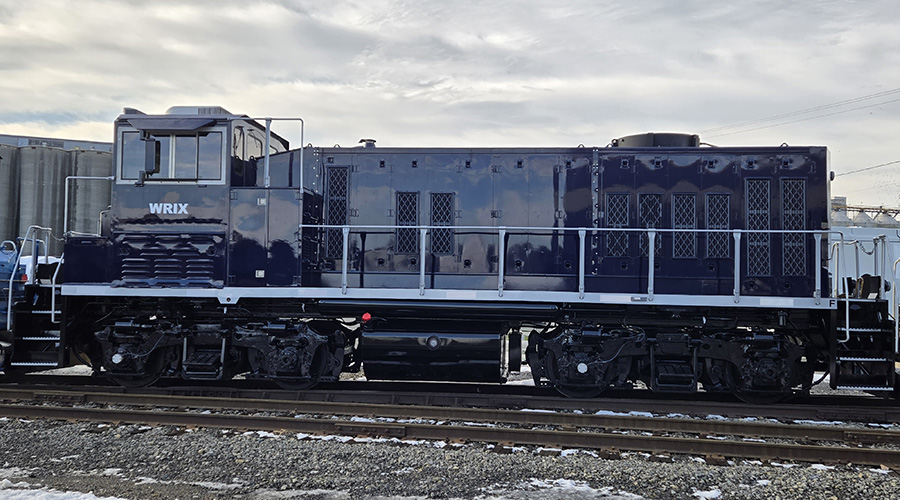 The Albany Port Railroad won a $464,620 grant from the state of New York to replace a Tier 0 switching locomotive with a new Tier 4-compliant switcher (shown).Port of Albany
“Currently, Sappi Fine Paper ships paper out using low-cube rail cars. The low-cube fleet will be obsolete due to a 50-year service life,” she said, adding that the cars will reach that lifespan-end stage between 2027 and 2029.
A high-cube car is a large box car featuring extra interior height (about 13 feet) to move such freight as paper rolls, auto parts, appliances and furniture. The cars are about two feet taller than standard box cars with more vertical space.
A low-cube car typically is a specialized, smaller-volume car designed to transport heavy cargo that needs protection, prioritizing payload density and specific handling requirements over volume.
To serve the mill, CTRR will need to gain the ability to use high-cube cars at the paper loading docks, said Jones.
“The existing track will need to be lowered and upgraded to accommodate the higher box cars and heavier weight,” she said.
Meanwhile, Albany Port Railroad Corp. recently landed a $464,620 grant from the state of New York to offset the cost of replacing a Tier 0 switching locomotive with a Tier 4-compliant switcher. The new locomotive will help the short line cut fuel usage and reduce air emissions of nitrous oxides (NOx), carbon dioxide and particulate matter.
Albany Port Railroad obtained the grant through the New York State Department of Transportation’s Passenger and Freight Rail Assistance Program. The state awarded more than $101 million in grants to support 25 projects designed to modernize railroads and port facilities.
Owned and operated by CSX and CPKC, Albany Port Railroad is situated near CSX’s major classification yard in Selkirk and CPKC’s major classification yard in Albany. The 20-mile short line is a Port of Albany tenant and has served the port since 1975, handling on-site industrial trackage services and on-dock heavy rail operations.
The new switcher features a Cummins-built, 1,500-horsepower engine and is designed to operate more quietly and environmentally friendly. The locomotive can reduce NOx emissions by 90%, decrease fuel consumption by 15%, and increase tractive effort and adhesion by 20%, Albany Port Railroad General Manager John Gaylord III says.
“We took the body of a 1970s locomotive and put in all new and some refurbished parts, making the engine the most compliant and environmentally friendly diesel-burning engine used on the railroad today,” he said.