LA port briefing addresses trade, tariff policies
5/18/2026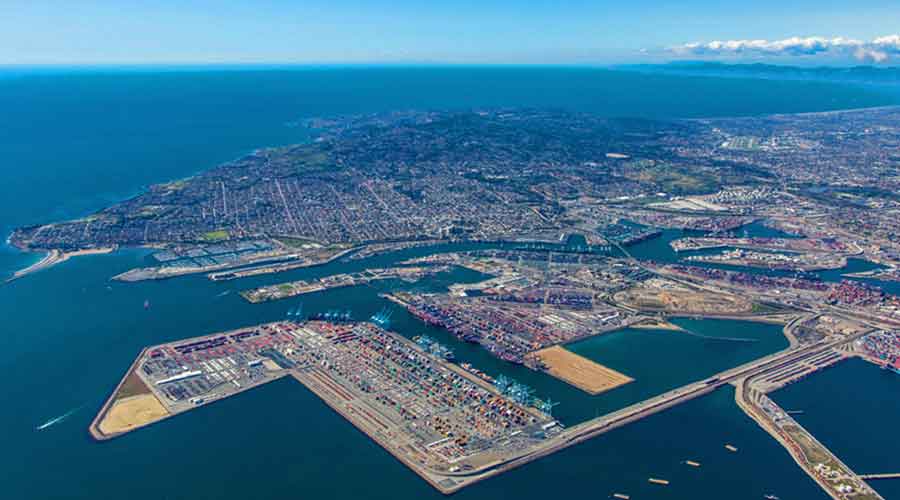
By Bridget Dean, Senior Associate Editor
Ahead of President Donald Trump’s recent two-day visit to Beijing, Port of Los Angeles Executive Director Gene Seroka hosted a media briefing on May 11 that dove into negotiating points between the United States and China.
The event addressed how present tariffs and the result of those high-level trade conversations between Trump and China President Xi Jinping will trickle down to day-to-day life for American farmers, business owners, consumers and freight transporters.
Joining Seroka for the briefing was former U.S. Trade Representative Katherine Tai, a trade policy lawyer who served in former President Joe Biden’s cabinet and is now leading the Coalition for New Trade, a nonprofit organization that advocates for renewed international trade policies.
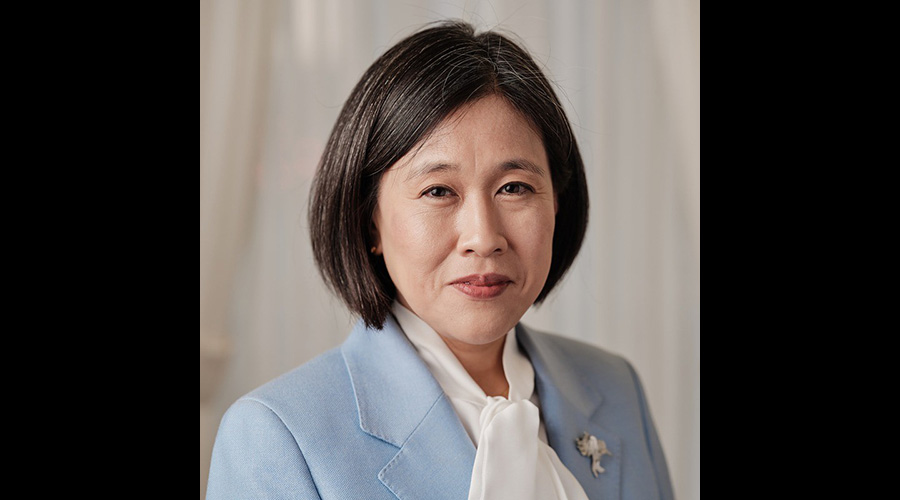 Katherine Tai
The near future of U.S. trade politics
A major stressor of the global trade economy is the Trump administration’s use of import tariffs as a method of restructuring trade relationships and driving change, Tai said. That method isn’t going away any time soon, she stressed. However, frequent legal challenges and trade talks mean that it isn’t clear which countries will be impacted, or how high those tariff rates will be.
Trump first implemented sweeping import tariffs in February 2025 using the International Emergency Economic Powers Act. That imposition was struck down in the U.S. Supreme Court back in February. The administration was disappointed, but not surprised, Tai said.
Tariffs since have been rolled out in the past 150 days under another statute. They also face legal challenges, but in the meantime, the U.S. Trade Representative and U.S. Department of Commerce initiated investigations of 60 trade partners. Tai anticipates the investigations will lead to results by the time those 150 days are up on July 24 for new tariff actions to be deployed.
“Tariff-rich environments will continue; the uncertainty will also continue,” she said.
U.S. farmers, in particular, have been placed in a tough position by the administration despite the farming industry’s strong support for Trump’s presidency. Last year’s faltering trade with China resulted in U.S. soybean exports to that country dropping 90% in 2025, according to Seroka.
Farmers are extremely savvy business people and they don’t like taking federal funding as bailouts, although a bill to provide said relief is making its way through Congress now, Tai said.
The fallout from tariffs has exposed exactly what her nonprofit aims to address: The U.S. needs a new approach to trade policies that work better for more people, including farmers, small businesses and front-line workers moving the cargo, such as dock workers, railroaders and truckers.
A changing U.S.-China trade relationship
The United States is the world’s largest consumer, while China is the world’s largest producer. That puts a heavy imbalance on the two countries’ trade. When the United States placed import tariffs on Chinese goods, that country started diversifying its export base. Exports to other countries were up 21% last year, while exports to the United States were down 9%, Seroka said.
Tai believes Trump is pushing for the United States to consume less and produce more. China, on the other hand, likely does not wish for that to happen, Tai added.
“I see the Chinese being the defenders of the [free trade] system that does need to change,” she said.
The result of the Trump-Xi conversation is a trade war truce: a return to the stability prior to Trump’s implementation of 145% import tariffs on Chinese goods, per a report by Reuters. That model, as noted by Tai, has clear benefits for China.
Despite this truce, the many changes to geopolitics and international trade over the past 10 years have changed how countries are developing their trade policies. The global economy is in the midst of a huge inflection point, transition or rupture, depending on who you talk to, Tai said.
The coalition’s course
Tai’s coalition aims to build and implement trade policies that work better for more people, by learning from what hasn’t worked under the second Trump administration’s policies or the free trade policies of prior administrations.
“This is exactly the right time to be having this conversation with everyone,” she said. The way the United States has been operating has been challenged by the current administration, which has “embraced its role as a vector of change itself,” Tai added.
The era of free trade incurred a lot of costs for Americans, too, many of which were not often talked about, she said. To Tai, the rules dictating trade today aren’t suited to the needs of workers and businesses today. All the change driven by the Trump administration has also stirred up a desire for economic stability, Tai said. And that’s exactly what she, and the coalition, aim to create.
“Change for the sake of change leaves a lot wanting," Tai said. “Change that is led by a particular vision, especially a positive vision, is I think, something that we all really hunger for.”