Federal grant will help Mississippi port garner more capacity
6/2/2026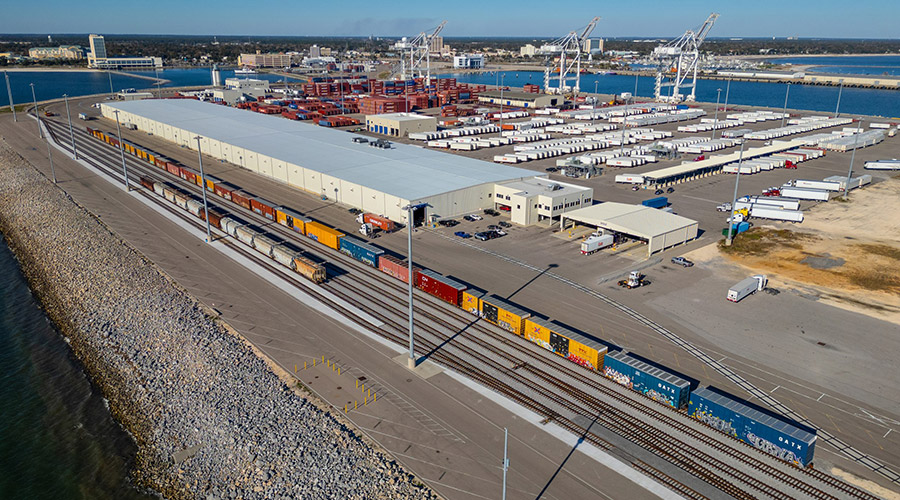
By Jeff Stagl, Managing Editor
There’s no construction timetable set, but the funding table’s now set for infrastructure improvements at the Port of Gulfport.
The U.S. Department of Transportation Maritime Administration recently awarded the Mississippi port an $11.25 million grant through the 2025 Port Infrastructure Development Program. The grant will cover nearly half of the $24.5 million cost to bolster infrastructure to support intermodal and container growth at the 204-acre port, which is served by CPKC.
The work calls for improving rail infrastructure at Terminal 5; adding an intra-port rail connection between the east and west piers; paving 8 acres at Terminal 4 and equipping the terminal with 24 refrigerated container towers; and purchasing a ship-to-shore crane transformer and a reach stacker.
In addition to the federal grant, project costs will be covered by the port and its partners. Stevedore company Ports America is contributing $9.5 million; the Mississippi Department of Transportation is providing $2.6 million and the port is pitching in $1.2 million for the work.
The infrastructure improvements will “strengthen our role as a strategic seaport, expand our intermodal capacity and improve resilience for the Gulf Coast supply chain,” said Jon Nass, the port’s CEO and executive director, in a press release.
The new rail connection figures to be an important infrastructure addition at the port.
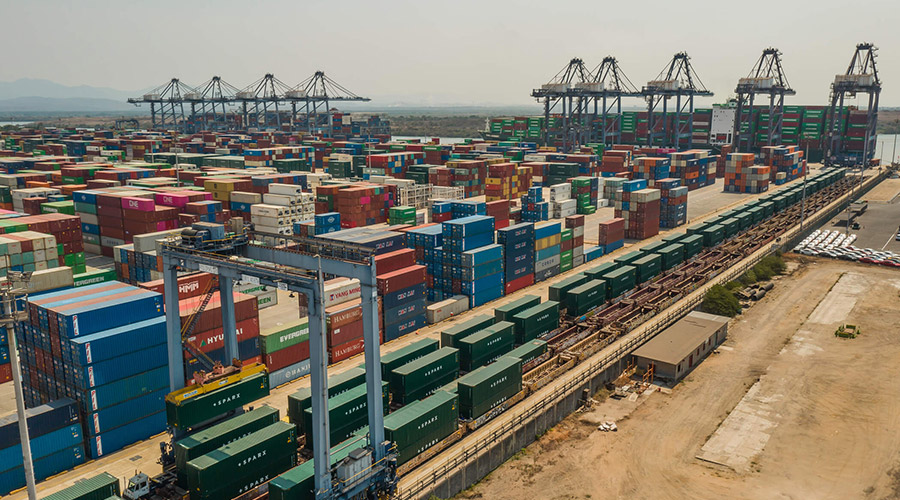 CPKC serves ports on the Pacific and Atlantic oceans and within the Gulf of Mexico, including the Port of Gulfport. The railroad also directly serves key regional and inland ports, such as the Port of Montreal in Quebec and Port of Thunder Bay in Ontario. CPKC
“This connector means trains will not have to cross U.S. 90 to get from one pier to the other, which creates efficiency on the port and reduces the hazards of crossing a busy four-lane highway,” says Melissa Scallan, the port’s director of communications and marketing.
Currently, there is no construction start date determined for the project.
“We are working with our state and private partners on plans and timelines,” Scallan says.
A bulk, break-bulk and container port, the Gulfport facility averages more than 2 million tons of cargo and more than 200,000 20-foot equivalent units annually. It’s the second largest importer of green fruit in the United States and the third-busiest container port on the Gulf of Mexico.
Late last year, the port took delivery of a large gantry crane, boosting its large-crane fleet to four.
Over the next five years, the port plans to deepen its surrounding channel from 36 feet to 46 feet through a major dredging project.